

Introduction
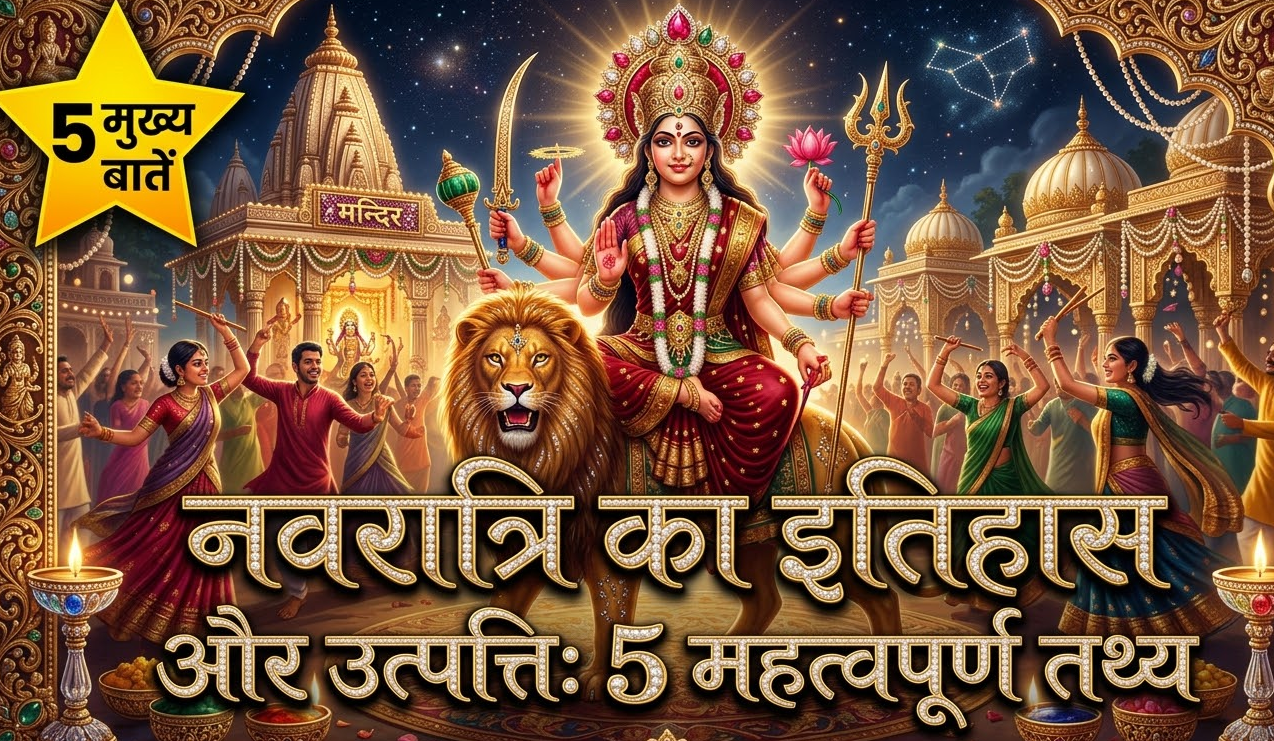
Navratri is one of the most important spiritual festivals in Hindu tradition, celebrated over nine sacred nights dedicated to Goddess Durga. This festival represents devotion, discipline, and the awakening of inner strength.
The history and origin of this festival are deeply rooted in mythology, ancient scriptures, seasonal cycles, and cultural traditions. It is not just a celebration but a spiritual process that reflects the victory of good over evil and the importance of self-purification.
Understanding Navratri helps us connect with its deeper meaning and significance beyond rituals and festivities.
1. Mythological Origin: Goddess Durga and Mahishasura
The most well-known story behind Navratri comes from Hindu mythology.
Mahishasura, a powerful demon, gained immense strength through a boon and started creating chaos in all three worlds. Unable to defeat him, the gods combined their energies to create Goddess Durga.
She fought the demon for nine days and nights and finally defeated him on the tenth day. This victory symbolizes the triumph of good over evil and forms the foundation of Navratri celebrations.
Deeper Meaning
- Represents courage and strength
- Symbolizes the destruction of negativity
- Highlights the power of divine energy
2. Connection with Ramayana
Another important aspect of Navratri is its connection with the epic Ramayana.
Lord Rama is believed to have worshipped Goddess Durga for nine days before his battle with Ravana. After seeking divine blessings, he defeated Ravana on the tenth day, which is celebrated as Dussehra.
Significance
- Emphasizes devotion before action
- Connects the festival with dharma
- Shows the importance of divine blessings
This connection adds depth to the meaning of Navratri in spiritual practice.

3. References in Ancient Scriptures
The origins of Navratri are also mentioned in several ancient Hindu texts.
Important scriptures include:
- Markandeya Purana
- Devi Bhagavata Purana
- Mahabharata
These texts describe Goddess Durga as the supreme divine energy and emphasize the importance of her worship during these sacred days.
Key Insights
- The Goddess is considered Adi Shakti (primordial energy)
- These days are ideal for spiritual practices
- Rituals like fasting and chanting are emphasized
This proves that Navratri has been celebrated for thousands of years.
4. Scientific and Seasonal Significance
The timing of Navratri is not random—it aligns with seasonal changes.
This festival is observed during transitions between seasons, when the body naturally requires detoxification and balance.
Scientific Perspective
- Fasting helps detoxify the body
- Light food improves digestion
- Meditation reduces stress
- Lifestyle discipline improves immunity
The practices followed during Navratri are designed to align the body with natural rhythms.
5. Cultural Evolution Across India
Navratri has evolved into a grand cultural celebration across India, with different regions observing it in unique ways.
North India
- Fasting and temple visits
- Ramleela performances
West India
- Garba and Dandiya
- Community celebrations
East India
- Durga Puja
- Artistic pandals
South India
- Golu displays
- Traditional rituals
This diversity reflects how Navratri has grown while maintaining its spiritual core.
Deeper Spiritual Meaning
Navratri is not just an external celebration—it represents an inner transformation.
Each day symbolizes a stage of personal growth:
- Stability
- Discipline
- Courage
- Creation
- Compassion
- Strength
- Destruction of negativity
- Purity
- Fulfillment
This journey reflects the movement from ignorance to enlightenment.

Modern Relevance
In today’s fast-paced world, Navratra remains highly relevant.
It teaches:
- Self-discipline
- Positive thinking
- Emotional balance
- Spiritual awareness
Following Navratri practices can help improve overall lifestyle and mental well-being.
Experience Spirituality in the Digital Age
Not everyone can visit temples regularly.
Durlabh Darshan allows devotees to experience:
- Temple darshan from home
- Aarti and rituals
- 3D VR spiritual experiences
Visit:
https://durlabhdarshan.com
Conclusion
Navratri is a powerful combination of mythology, spirituality, science, and culture.
From the story of Goddess Durga to the devotion of Lord Rama, from ancient scriptures to modern celebrations, it continues to inspire millions of people.
Understanding Navratra helps us celebrate it with deeper awareness and meaning.
Follow our social media handles for more such content