

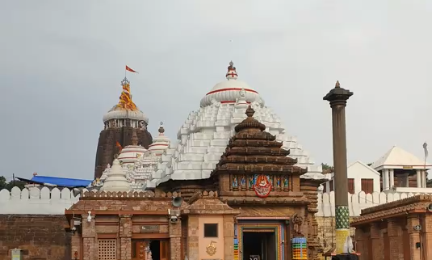
Why Does the Jagannath Temple Remain Closed for 15 Days? The Complete Story of Anasara, Lord Jagannath’s Divine Illness, and Its Spiritual Significance
The Jagannath Temple in Puri, Odisha, is one of the holiest pilgrimage sites in Hinduism and forms an integral part of the sacred Char Dham Yatra. Dedicated to Lord Jagannath, an incarnation of Lord Vishnu and Lord Krishna, the temple attracts millions of devotees from across the globe every year.
Among the many fascinating traditions associated with this ancient temple, one stands out for its uniqueness and spiritual depth:
Why does the Jagannath Temple remain closed for 15 days every year?
For devotees unfamiliar with the tradition, it may appear surprising that one of India’s most sacred temples temporarily stops public darshan. However, this is not due to renovation, maintenance, or administrative reasons. Instead, it is one of the most beautiful and emotionally moving traditions in Sanatan Dharma.
According to temple traditions, after the grand Snana Yatra (Sacred Bathing Festival), Lord Jagannath, Lord Balabhadra, and Devi Subhadra fall ill with a symbolic fever. During this period, known as Anasara (also called Anavasara), the deities remain away from public view for approximately fifteen days while they undergo divine rest and Ayurvedic treatment.
This remarkable tradition reflects a unique aspect of Jagannath worship—the Lord is worshipped not merely as an idol but as a living member of the family. Every stage of life, including bathing, resting, illness, treatment, recovery, and celebration, is lovingly observed by devotees and temple servitors.
In this comprehensive guide, we explore the complete story behind Anasara, its historical and spiritual significance, the rituals performed during these fifteen days, and why this tradition continues to inspire millions of devotees around the world.
What is Anasara?
The word Anasara (also spelled Anavasara) literally means “a period when the Lord remains unavailable for public darshan.”
It begins immediately after the annual Snana Yatra, one of the most important festivals celebrated at the Jagannath Temple.
On this day, Lord Jagannath, Lord Balabhadra, Devi Subhadra, and Sudarshana Chakra are ceremonially bathed with 108 sacred pitchers of holy water drawn from the temple’s sacred Golden Well (Suna Kua).
Following this elaborate bathing ritual, the deities are believed to develop a fever.
As a result, they are taken to a private chamber known as the Anasara Ghara, where they remain for approximately fifteen days.
During this sacred period:
- Public darshan is suspended.
- The temple’s inner rituals continue privately.
- Only designated temple servitors are permitted to enter.
- Ayurvedic treatment is ceremonially offered to the deities.
- Special food and herbal preparations replace the regular offerings.
Although the temple itself remains open and daily worship continues, devotees cannot see Lord Jagannath until He recovers.
Why Does Lord Jagannath Become Ill?
One of the most frequently asked questions is:
How can the Supreme Lord become sick?
The answer lies in the extraordinary philosophy of Jagannath worship.
Unlike many other temple traditions where the deity is worshipped as a distant divine figure, Lord Jagannath is treated as a living king, beloved child, and family member.
Every aspect of human life is lovingly reflected in His daily routine.
He wakes up.
He eats.
He changes clothes.
He travels.
He rests.
And once every year…
He becomes ill.
Temple tradition explains that after receiving the ceremonial bath using 108 pitchers of cool water during the intense summer heat of the month of Jyeshtha, the Lord catches a symbolic fever.
Of course, devotees understand that the Supreme Lord does not suffer from illness in the ordinary human sense.
Instead, this sacred tradition beautifully illustrates His compassion and closeness to humanity.
By accepting human experiences, Lord Jagannath reminds devotees that He lovingly participates in every aspect of life and remains emotionally connected with His devotees.
The Philosophy Behind the Divine Illness
At first glance, the idea of God becoming ill may seem unusual.
However, Sanatan Dharma often presents profound spiritual truths through symbolic traditions.
The illness of Lord Jagannath teaches several important lessons.
God Lives Among His Devotees
Lord Jagannath is not worshipped as a distant cosmic force.
He lives with His devotees.
He accepts their love.
He experiences their emotions.
He shares their joys and sorrows.
This intimate relationship makes Jagannath worship unique among the world’s spiritual traditions.

The Lord Accepts Human Emotions
Throughout Hindu scriptures, Lord Vishnu and Lord Krishna repeatedly demonstrate divine compassion by participating in human life.
Lord Rama experienced exile.
Lord Krishna accepted the role of a friend, son, and guide.
Similarly, Lord Jagannath accepts illness—not because He lacks divine power, but because He wishes to demonstrate His closeness to His devotees.
A Lesson in Rest and Balance
Modern life often glorifies constant work.
Anasara reminds devotees that even the Lord observes a period of rest.
The festival teaches that physical, emotional, and spiritual renewal are essential parts of life.
Rest is not weakness.
Rest is preparation for greater service.
This message is especially meaningful in today’s fast-paced world.
What Happens During Snana Yatra?
To understand Anasara, one must first understand Snana Yatra, the festival that immediately precedes it.
Snana Yatra is celebrated on the full moon day of the Hindu month of Jyeshtha.
It marks the annual ceremonial bathing festival of Lord Jagannath.
This is one of the rare occasions when the deities are brought outside the sanctum sanctorum for public viewing.
Thousands of devotees gather at the Snana Mandap, a specially constructed bathing platform inside the temple complex.
The festival follows a carefully prescribed sequence of rituals.
Collection of Sacred Water
The holy water used during the ceremony is collected from the temple’s sacred Golden Well (Suna Kua).
Only specially authorized temple servitors are permitted to draw the water.
Every ritual is performed according to centuries-old traditions.
Preparation of the 108 Sacred Pitchers
The collected water is filled into 108 sanctified pots (Kalashas).
These vessels are purified through Vedic mantras and traditional rituals before the bathing ceremony begins.
The number 108 holds profound spiritual significance in Hinduism, symbolizing completeness, cosmic harmony, and divine perfection.
Grand Procession of the Deities
Lord Jagannath, Lord Balabhadra, Devi Subhadra, and Sudarshana Chakra are carried in an elaborate ceremonial procession to the Snana Mandap.
The atmosphere becomes deeply devotional.
Conch shells echo through the temple.
Traditional drums fill the air.
Priests chant Vedic hymns.
Thousands of devotees sing the holy names of the Lord.
The entire city of Puri transforms into a festival of devotion.
The Sacred Bath
The deities are ceremonially bathed with all 108 sacred pitchers.
This is considered one of the holiest moments of the Jagannath festival calendar.
Devotees believe that witnessing this divine bathing ceremony brings immense spiritual merit and the blessings of Lord Jagannath.
Durlabh Darshan Integration
The sacred traditions of Lord Jagannath, including the Snana Yatra, Anasara, and Rath Yatra, inspire millions of devotees every year. However, visiting Puri during these occasions may not always be possible due to distance, health, travel limitations, or personal commitments. The Durlabh Darshan 3D VR streaming platform provides an additional way for devotees to stay spiritually connected by offering immersive 360° virtual darshan experiences of India’s revered temples. While it does not replace the sanctity of a physical pilgrimage, it enables devotees to experience the temple’s divine atmosphere, rituals, and spiritual ambiance with remarkable clarity. Whether preparing for a future pilgrimage or seeking to maintain a regular devotional connection, Durlabh Darshan offers a meaningful and accessible way to engage with India’s sacred heritage from anywhere in the world.
For More Information Visit :
Follow our social media handles for more such content