

Praramban temple restoration is a vital process that helps preserve our religious and cultural heritage. When an ancient temple becomes damaged over time, its restoration becomes necessary not only from a devotional perspective but also from cultural and historical standpoints.
The Importance of Temple Restoration
Our country has countless ancient temples that have served as centers of devotion for centuries. Over time, these temples begin to deteriorate due to natural causes, weather effects, and human neglect. The tradition of praramban temple restoration is mentioned in our scriptures, where temple construction and preservation are considered acts of punya (merit).
Restoration is not merely the repair of stones. It is about reviving a sacred space where generations have had darshan (sacred viewing) of the Lord. When a temple is preserved, the faith, tradition, and history connected to it are also safeguarded.
Key Stages of the Restoration Process
Temple restoration is a systematic process involving several stages. First, the current condition of the temple is carefully studied. Experts assess which parts are damaged and what type of repairs are needed.
Next, information about the original architecture is gathered. According to tradition, ancient temples were constructed following the principles of vastu shastra. These same principles are observed during restoration as well.
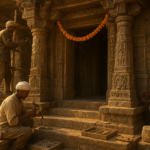
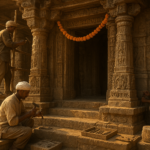
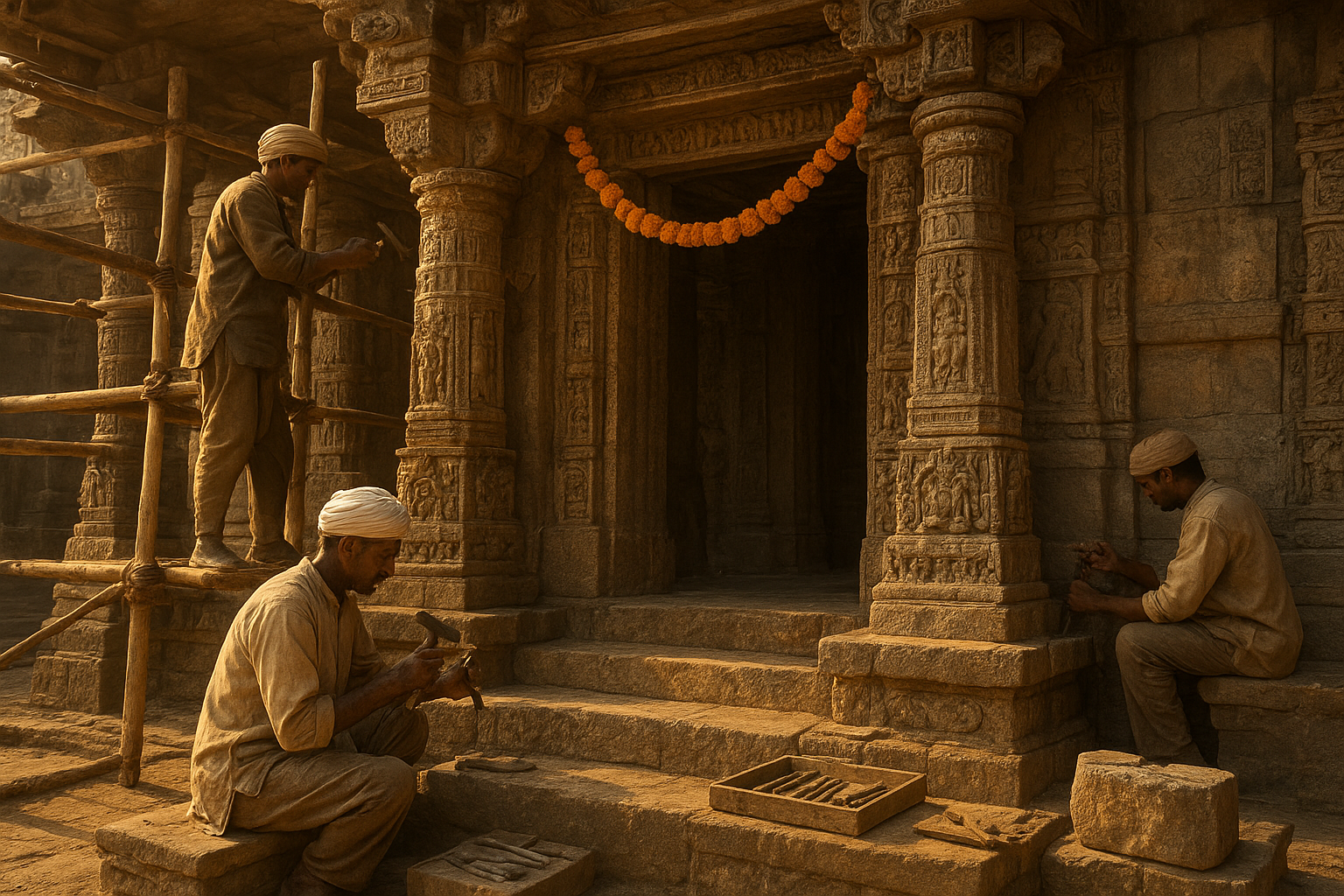
Then, necessary materials and skilled craftsmen are arranged. Using traditional techniques in restoration work is important so that the temple’s original identity is maintained.
Religious Rituals and Scriptural Protocols
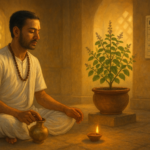
Following scriptural procedures in praramban temple restoration is essential. Before beginning restoration work, proper puja and sankalp (sacred resolve) are performed. If the temple’s installed murti (deity image) needs to be temporarily relocated, that too is done according to scriptural methods.
During the work, special care is taken to maintain the temple’s sanctity. Complete purity is observed when working in the garbhagriha (sanctum sanctorum) and other sacred spaces. After the work is completed, prana pratishtha (consecration) and mahabhishek (grand ritual bathing) ceremonies are conducted again.
Preserving Traditional Craftsmanship
Protecting traditional craftsmanship during restoration is a significant challenge. Ancient temples contain stone carvings, woodwork, and murals that are examples of remarkable artistry. Restoration efforts strive to preserve these in their original form as much as possible.
The role of traditional craftsmen becomes crucial here. Artisans connected to the sthapati (master builder) tradition, who have been skilled in the art of temple construction for generations, use their expertise to bring damaged sections back to life.
The Role of the Community
Praramban temple restoration is not solely the responsibility of priests or administration. Local community participation is vital. Devotees contribute to the restoration according to their faith and capacity.
Through shramdan (voluntary labor), financial donations, or donations of physical materials, devotees can participate in this meritorious work. When an entire community comes together to preserve the temple of their beloved deity, it becomes a beautiful example of collective devotion.
Integration of Modern Technology and Traditional Knowledge
In today’s times, modern technology is also being used in temple restoration. Modern engineering techniques prove useful for structural strengthening. However, they are employed in such a way that the temple’s traditional beauty and sanctity are not compromised.
Modern tools help in documenting the original architecture, assessing damage, and planning future preservation. Still, traditional materials and methods are given priority in the actual construction work.
Benefits of Restoration
When a temple undergoes restoration, it once again becomes a safe and beautiful place of worship for devotees. Repairs to damaged roofs, walls, and floors ensure that devotees face no obstacles in darshan and puja.
A preserved temple safeguards our religious and cultural heritage for future generations. When young people see preserved ancient temples, they receive an opportunity to connect with their roots.
Frequently Asked Questions
Question: How long does temple restoration take?
Answer: Depending on the temple’s size and extent of damage, restoration can take anywhere from a few months to several years. Smaller temples may be restored in three to six months, while the timeframe for large temple complexes may be longer.
Question: Are darshan closed during praramban temple restoration?
Answer: This depends on the nature of the work. If work is being done in the main garbhagriha, temporary arrangements for darshan may be made. Often, restoration is conducted in such a manner that daily puja and darshan continue without interruption.
Question: How can devotees contribute to restoration?
Answer: Devotees can contribute through financial donations, voluntary labor, or donations of construction materials. By contacting the temple committee, you can support according to your convenience. Even the smallest contribution helps this meritorious work.
Question: Is the original murti replaced during restoration?
Answer: No, the original murti is not replaced. If the murti is damaged, it is repaired, or in special circumstances, a new consecration is performed according to scriptural procedures. The sanctity and tradition of the original murti are given highest importance.
Question: Is government assistance available for ancient temple restoration?
Answer: Many state governments and archaeological departments run schemes for the preservation of ancient and historically significant temples. Temple management can obtain information about these schemes and apply.
Experience Divine Darshan with Durlabh Darshan
If you wish to have darshan of a distant temple but cannot travel, the Durlabh Darshan app offers you a unique medium. Through this app, you can have darshan of various renowned temples from your home using AR/VR technology. This is not a replacement for physical pilgrimage but a supportive medium that deepens your devotion.
For More Information Visit :
Follow our social media handles for more such content