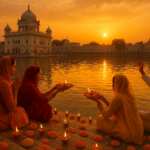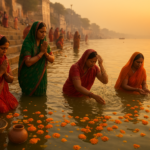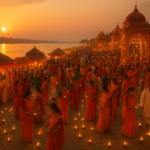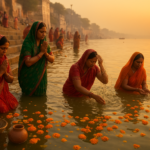



In November 2026, devotees in Delhi observed Chhath Puja with unwavering devotion, offering prayers to Lord Surya despite the pollution in the river. This four-day festival is known for its water-based rituals and worship of the Sun God, where devotees offer arghya (sacred offerings) to both the setting and rising sun.
The Sacred Significance of Chhath Puja
Chhath is an ancient tradition from Bihar and eastern Uttar Pradesh, now celebrated across India. This vrat (fast) is dedicated to Surya Dev and Chhathi Maiya. Devotees observe a nirjala fast (without water) and offer arghya to the sun while standing in pure water. The festival is a sacred occasion to express gratitude to nature and solar energy.
According to tradition, both women and men can observe the Chhath vrat. The person observing the fast is called parvaitin or vratalu. This four-day spiritual discipline requires complete purity and restraint.
Special Arrangements for Chhath Puja in Delhi
A large Bihari and Purvanchali community lives in the capital city of Delhi, celebrating Chhath Puja with great enthusiasm. Thousands of devotees gather at the ghats of the Yamuna River. Places like Kalindi Kunj, ITO Ghat, and Geeta Colony become major Chhath centers.
The administration makes special arrangements for devotees’ convenience. Ghats are cleaned, lighting is arranged, and security is provided. Many social organizations and arva committees organize ghat decoration and distribute prasad to devotees.
Chhath Celebration in November 2026
Chhath Puja in Delhi was celebrated with special fervor in November 2026. The Guardian and The Hindu reported on this year’s celebration. Despite concerns about pollution in the Yamuna River, devotees did not abandon their faith. Early in the morning, devotees stepped into the cold water to offer arghya to the rising sun.
This steadfastness of devotion and faith shows that true belief does not waver under any circumstance. Mothers and family members follow the rules of the vrat with complete reverence and pray to Surya Dev for the family’s wellbeing.
The Four-Day Ritual of Chhath Puja
On the first day, Nahay-Khay, devotees bathe and consume pure vegetarian food. On the second day, Kharna, a full-day nirjala fast is observed, and in the evening, prasad of kheer made with jaggery and roti is consumed.
On the third day, Sandhya Arghya is the most important ritual. Arghya is offered to the setting sun in a soop (bamboo basket) filled with milk, water, and fruits. Devotees sing Chhath songs at the ghat and immerse themselves in devotional fervor.
On the fourth day, Usha Arghya is offered at dawn. The vrat concludes by offering arghya to the rising sun. Family members touch the devotee’s feet to receive blessings and partake of the prasad.
Items Used in Chhath Puja
Bamboo baskets or soop are used in Chhath Puja. These contain thekua, rice laddoos, coconut, banana, and seasonal fruits. Suthni and lemon are also included in the prasad. Items made with sugar derived from sugarcane juice hold special significance.
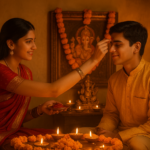
Clay lamps filled with ghee or oil are prepared for lighting. Devotees wear new or clean clothes. Special attention is paid to maintaining purity in the home throughout the four days.
Unshakeable Faith Amidst Pollution
Despite increasing pollution in the Yamuna River, there is no decline in the number of devotees at Chhath Puja in Delhi. Artificial ponds are created at many locations where clean water is arranged. Still, crowds of devotees throng the traditional ghats.
This scene demonstrates that in Indian culture, faith holds the highest place. Devotees believe that by Lord Surya’s grace, all difficulties are removed. This firm resolve and sacrifice of mothers is for the welfare of the family.
Chhath Songs and Cultural Tradition
Folk songs sung during Chhath Puja are a hallmark of this festival. Composed in Bhojpuri, Magahi, and Maithili, these songs praise Surya Dev and Chhathi Maiya. Songs like “Kelwa Je Pharela Ghavad Se” and “Ugi He Suruj Dev” resonate at the ghats.
These songs are not merely devotional hymns but the cultural heritage of Purvanchal. Women of the family sing together, and the atmosphere becomes filled with devotion. The younger generation is also learning these songs and carrying the tradition forward.
FAQ – Questions Related to Chhath Puja
Question: Where is Chhath Puja celebrated in Delhi?
Answer: In Delhi, Chhath Puja is celebrated at Kalindi Kunj, ITO Ghat, Geeta Colony, and other ghats along the Yamuna River. Artificial ponds are also created in many areas.
Question: How many days does the Chhath vrat last?
Answer: The Chhath vrat lasts four days – Nahay-Khay, Kharna, Sandhya Arghya, and Usha Arghya. A nirjala fast is observed on the third and fourth days.
Question: Who is worshipped during Chhath Puja?
Answer: Chhath Puja is dedicated to Surya Dev and Chhathi Maiya. Arghya is offered to both the setting and rising sun, with prayers for family welfare.
Question: Can men also observe the Chhath vrat?
Answer: Yes, both women and men can observe the Chhath vrat. The person observing the fast is called parvaitin or vratalu.
Question: What is the solution to the pollution problem during Chhath Puja?
Answer: The administration cleans the ghats, and artificial ponds filled with clean water are created at many locations. Devotees arrange for clean water wherever possible.
Experience Divine Darshan with Durlabh Darshan
If you cannot reach the Chhath ghat or live far away, Durlabh Darshan brings you the opportunity for darshan from home. With our AR/VR technology, you can experience darshan of sacred temples and ghats. While this cannot replace a physical pilgrimage, it is helpful for devotees who are unable to travel due to health or distance. Download the Durlabh Darshan app and receive a divine experience.
For More Information Visit :
Follow our social media handles for more such content