

Navdurga
Goddess Durga is considered the symbol of power, courage, and devotion. The sacred festival of Navratri is a special occasion dedicated to the worship of divine feminine energy, where devotees pray to the Goddess with deep faith and dedication.
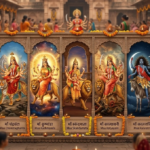
According to Sanatan tradition, the nine days of Navratri are devoted to the worship of nine different forms of Goddess Durga, collectively known as Navdurga. During these nine days, devotees observe fasts, perform rituals, chant mantras, and seek blessings for happiness, peace, strength, and spiritual growth.
Navratri is not just a religious festival; it is also a period of spiritual discipline and inner purification. Each day represents a unique form of the Goddess, and every form carries a distinct spiritual message and significance.
Below is a complete guide to the nine forms of Goddess Durga worshipped during Navratri.
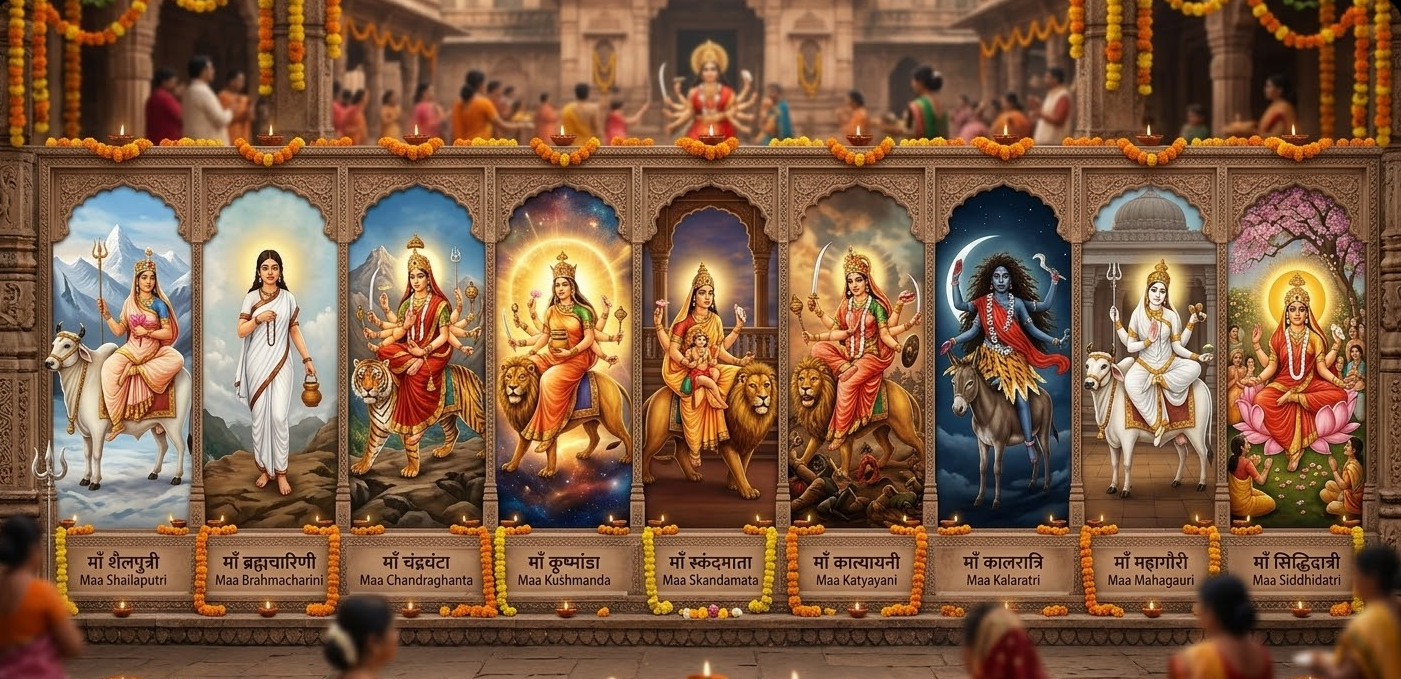
1. Maa Shailputri – The Daughter of the Mountains , Navdurga
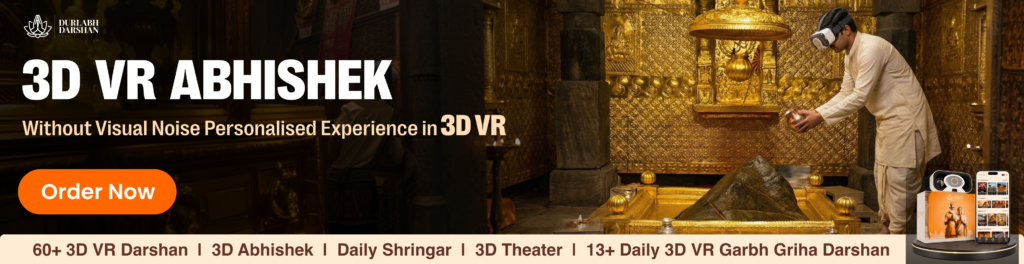
The first day of Navratri is dedicated to Maa Shailputri. The name “Shailputri” means “Daughter of the Mountains,” as she is believed to be the daughter of King Himalaya and the first form of Goddess Parvati.
She holds a trident in her right hand and a lotus in her left hand, and her vehicle is Nandi, the bull.
Significance:
Worshipping Maa Shailputri brings stability, strength, and courage into life. Devotees seek inner strength and confidence on this day.
2. Maa Brahmacharini – The Goddess of Tapasya , Navdurga
The second day is dedicated to Maa Brahmacharini, the Goddess of penance and devotion.
She holds a rosary (jap mala) in one hand and a water pot (kamandal) in the other, symbolizing discipline and spiritual practice.
Significance:
Her worship grants knowledge, patience, and determination. She inspires devotees to follow the path of dedication and self-control.
3. Maa Chandraghanta – The Warrior Goddess , Navdurga
The third day is devoted to Maa Chandraghanta. She is named after the crescent moon shaped like a bell on her forehead.
She rides a lion and holds multiple weapons in her ten hands, symbolizing bravery and readiness to fight evil.
Significance:
Her worship removes fear, negativity, and obstacles, while blessing devotees with courage and confidence.
4. Maa Kushmanda – The Creator of the Universe , Navdurga
The fourth day is dedicated to Maa Kushmanda, who is believed to have created the universe with her divine smile.
She rides a lion and has eight hands holding various divine weapons and objects.
Significance:
Worshipping Maa Kushmanda brings health, energy, prosperity, and vitality into life.
5. Maa Skandamata – The Motherly Form , Navdurga
The fifth day is dedicated to Maa Skandamata, the mother of Lord Kartikeya (Skanda).
She is seated on a lotus and carries her child in her lap, representing maternal love and protection.
Significance:
Her worship brings peace, harmony, and happiness in family life. She blesses devotees with wisdom and nurturing energy.
6. Maa Katyayani – The Fierce Warrior , Navdurga
The sixth day is dedicated to Maa Katyayani, one of the most powerful forms of Goddess Durga.
She was born as the daughter of Sage Katyayan and is depicted riding a lion with multiple weapons.
Significance:
Her worship grants strength, courage, and success. She helps devotees overcome difficulties and challenges.
7. Maa Kalaratri – The Destroyer of Darkness , Navdurga
The seventh day is devoted to Maa Kalaratri, the fiercest and most intense form of Goddess Durga.
Although her appearance is fierce, she protects her devotees and destroys evil forces.
Significance:
Worshipping Maa Kalaratri removes fear, negativity, and evil influences, bringing protection and fearlessness.
8. Maa Mahagauri – The Symbol of Purity , Navdurga
The eighth day is dedicated to Maa Mahagauri, the most peaceful and pure form of the Goddess.
She is depicted wearing white clothes and riding a bull, symbolizing purity and serenity.
Significance:
Her worship brings peace, happiness, and purification of past karmas.
9. Maa Siddhidatri – The Bestower of Siddhis , Navdurga
The ninth and final day is dedicated to Maa Siddhidatri, who grants spiritual powers and divine knowledge.
She is considered the complete and ultimate form of Goddess Durga.
Significance:
Her worship brings success, wisdom, and spiritual enlightenment.
Importance of Worshipping Navdurga During Navratri
Worshipping the nine forms of Goddess Durga during Navratri holds immense spiritual significance. Each day represents a step toward inner growth and transformation.
Through devotion and discipline, devotees seek:
- Positive energy
- Inner strength
- Peace and harmony
- Spiritual awakening
Fasting, prayer, and mantra chanting during Navratri help purify the mind and body, leading to a balanced and meaningful life.
Experience Divine Darshan from Home – Durlabh Darshan
In today’s fast-paced world, not everyone can visit temples regularly due to distance, health, or time constraints.
Durlabh Darshan offers a unique 3D VR spiritual experience that allows devotees to witness divine temple environments and rituals from the comfort of their homes.
Through this experience, you can:
- Explore sacred temples virtually
- Watch live aartis and rituals
- Stay connected with your faith daily
This is a beautiful blend of devotion and technology, making spirituality more accessible for everyone.
For more details:
https://durlabhdarshan.com
Conclusion
Navratri is a grand celebration of divine feminine energy and spiritual devotion. By worshipping the nine forms of Goddess Durga, devotees seek strength, peace, prosperity, and spiritual growth.
Each form of Navdurga teaches us valuable life lessons—courage, discipline, compassion, and wisdom.
Let us embrace this sacred festival with faith and devotion and say:
Jai Mata Di
Follow our social media handles for more such content