

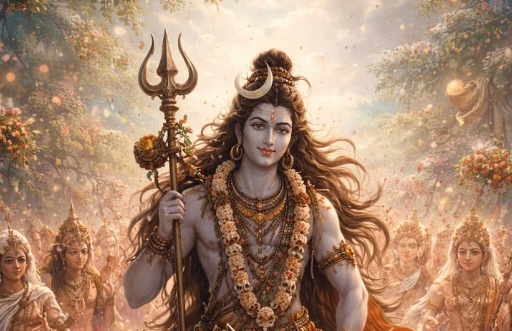
Shri Shiv Chalisa
Lord Shiva is worshipped as the embodiment of compassion, power, detachment, transformation, and divine grace. He is known as Mahadev, Bholenath, Shankar, Neelkanth, and the destroyer of evil. In Hindu tradition, Lord Shiva is both the great ascetic and the loving protector of devotees. He is simple in nature, easily pleased by sincere devotion, and always ready to bless those who remember him with faith.
The Shri Shiv Chalisa is a beautiful devotional hymn that praises Lord Shiva’s divine form, heroic deeds, compassion, and protection of devotees. It also highlights important stories associated with him, such as the drinking of poison during the churning of the ocean, the descent of Ganga, the destruction of demons, and his readiness to rescue those in distress. Devotees recite the Shri Shiv Chalisa for peace, courage, protection, removal of suffering, spiritual strength, and divine grace.
Below is the full Shri Shiv Chalisa, followed by its importance and simple meaning.
Shri Shiv Chalisa
Doha
Shri Ganesh Girija Suvan, Mangal Mool Sujan |
Kahat Ayodhyadas Tum, Dehu Abhay Vardan ||
Chaupai
Jai Girija Pati Deen Dayala |
Sada Karat Santan Pratipaala ||
Bhaal Chandrama Sohat Neeke |
Kanan Kundal Nagphani Ke ||
Ang Gaur Shir Gang Bahaye |
Mundmal Tan Chhaar Lagaye ||
Vastra Khaal Baghambar Sohe |
Chhavi Ko Dekh Nag Muni Mohe || 1 ||
Maina Maatu Ki Hvhai Dulari |
Baam Ang Sohat Chhavi Nyari ||
Kar Trishool Sohat Chhavi Bhaari |
Karat Sada Shatrun Kshaykari ||
Nandi Ganesh Sohai Tahan Kaise |
Sagar Madhya Kamal Hain Jaise ||
Kartik Shyam Aur Ganraau |
Ya Chhavi Ko Kahi Jaat Na Kaau || 2 ||
Devan Jabahin Jaay Pukara |
Tab Hi Dukh Prabhu Aap Nivara ||
Kiya Updrav Tarak Bhaari |
Devan Sab Mili Tumhin Juhari ||
Turat Shadaanana Aap Pathayu |
Lavnimesh Mahan Maari Girayu ||
Aap Jalandhar Asur Sanhara |
Suyash Tumhaar Vidit Sansara || 3 ||
Tripurasur San Yuddh Machai |
Sabahin Kripa Kar Leen Bachai ||
Kiya Tapahin Bhagirath Bhaari |
Purab Pratigya Tasu Purari ||
Danin Mahan Tum Sam Kou Naahin |
Sevak Stuti Karat Sadahin ||
Ved Naam Mahima Tav Gaai |
Akath Anaadi Bhed Nahi Paai || 4 ||
Pragat Udadhi Manthan Mein Jwala |
Jare Surasur Bhaye Vihala ||
Keenh Daya Tahan Karee Sahai |
Neelkanth Tab Naam Kahai ||
Poojan Ramchandra Jab Keenha |
Jeet Ke Lank Vibheeshan Deenha ||
Sahas Kamal Mein Ho Rahe Dhaari |
Keenh Pariksha Tabahin Purari || 5 ||
Ek Kamal Prabhu Rakheu Joi |
Kamal Nayan Poojan Chahan Soi ||
Kathin Bhakti Dekhee Prabhu Shankar |
Bhaye Prasann Diye Ichhit Var ||
Jai Jai Jai Anant Avinashi |
Karat Kripa Sab Ke Ghatvasi ||
Dusht Sakal Nit Mohi Satavai |
Bhramat Rahe Mohi Chain Na Aavai || 6 ||
Trahi Trahi Main Nath Pukaro |
Yahi Avsar Mohi Aan Ubaro ||
Lai Trishool Shatrun Ko Maro |
Sankat Se Mohi Aan Ubaro ||
Maatu Pita Bhrata Sab Koi |
Sankat Mein Poochhat Nahi Koi ||
Swami Ek Hai Aas Tumhari |
Aay Harahu Ab Sankat Bhaari || 7 ||
Dhan Nirdhan Ko Det Sadahin |
Jo Koi Janche Wo Phal Paahin ||
Astuti Kehi Vidhi Karaun Tumhari |
Kshamahu Nath Ab Chook Hamari ||
Shankar Ho Sankat Ke Naashan |
Mangal Karan Vighna Vinashan ||
Yogi Yati Muni Dhyan Lagavain |
Narad Sharad Sheesh Navavain || 8 ||
Namo Namo Jai Namo Shivay |
Sur Brahmadik Paar Na Paay ||
Jo Yeh Path Kare Man Lai |
Ta Paar Hot Hai Shambhu Sahai ||
Riniya Jo Koi Ho Adhikari |
Path Kare So Pavan Haari ||
Putra Heen Kar Ichha Koi |
Nishchay Shiv Prasad Tehi Hoi || 9 ||
Pandit Trayodashi Ko Lave |
Dhyan Poorvak Hom Karave ||
Trayodashi Brat Kare Hamesha |
Tan Nahi Take Rahe Kalesha ||
Dhoop Deep Naivedya Chadhave |
Shankar Sammukh Path Sunave ||
Janm Janm Ke Paap Nasave |
Antvas Shivpur Mein Pave || 10 ||
Kahe Ayodhya Aas Tumhari |
Jaani Sakal Duhkh Harahu Hamari ||
Doha
Nitt Nem Kar Pratah Hi, Path Karaun Chalisa |
Tum Meri Manokamna, Poorn Karo Jagdish ||
Magsar Chhathi Hemant Ritu, Samvat Chausat Jaan |
Astuti Chalisa Shivhi, Poorn Keen Kalyan ||

Importance of Shri Shiv Chalisa
The Shri Shiv Chalisa is a hymn of devotion, surrender, and faith in Lord Shiva’s protecting grace. It presents Shiva as compassionate, powerful, and ever ready to help those who call upon him. He is described as the lord of Goddess Parvati, the protector of saints, the destroyer of demons, and the remover of suffering.
What makes Lord Shiva especially beloved is his simplicity. He is not distant or difficult to please. A sincere prayer, true devotion, and remembrance from the heart are considered enough to attract his grace. The Chalisa reflects this spirit by repeatedly showing Shiva as the one who rescues the distressed, forgives mistakes, and grants blessings freely.
Simple Meaning of the Chalisa
The Chalisa begins by praising Lord Shiva’s divine appearance. He is described with the moon on his forehead, Ganga flowing from his head, ashes on his body, a garland of skulls, serpent ornaments, and tiger skin clothing. This form may seem fierce, but it carries deep spiritual meaning. It shows Shiva as beyond worldly attachment, beyond fear, and beyond ordinary beauty. He represents truth that is not dependent on external luxury.
The hymn also describes the presence of Parvati, Nandi, Ganesha, and Kartikeya around him, creating a divine and beautiful family image. Shiva is thus shown not only as an ascetic but also as a loving householder and compassionate protector.
The Chalisa recalls how the gods prayed to Shiva whenever they were in distress, and how he removed their suffering. It mentions the destruction of demons such as Tarakasura, Jalandhar, and Tripurasura. These stories highlight Shiva’s role as the destroyer of destructive forces and the defender of cosmic order.
One important part of the Chalisa recalls Bhagirath’s penance and Shiva’s role in bringing the river Ganga to Earth. By receiving Ganga upon his head, Shiva protects the world from her powerful descent. This shows him as the one who channels divine energy in a way that benefits creation.
The hymn also remembers the famous story of the churning of the ocean, when deadly poison emerged and threatened gods and demons alike. Lord Shiva, out of compassion, drank the poison to save the universe, and from that act he came to be known as Neelkanth, the blue-throated one. This episode makes Shiva one of the greatest symbols of sacrifice and protection.
Another important section recalls Lord Ram worshipping Shiva before the battle in Lanka. Shiva then tested the devotion of Ram and, being pleased, blessed him. This shows the mutual reverence between divine forms in Hindu tradition and highlights Shiva as the granter of boons to sincere devotees.
In the later verses, the devotee speaks very personally, asking Shiva to remove suffering, destroy enemies, and rescue him from distress. He admits that in times of trouble even worldly relations may fail, but Shiva remains the true refuge. This gives the Chalisa deep emotional power. It is not only a hymn of praise but also a heartfelt prayer for help.
The Chalisa further says that Shiva blesses both the rich and the poor, forgives mistakes, destroys obstacles, and is meditated upon by yogis, sages, Narad, and Saraswati. It reassures the devotee that whoever recites this Chalisa with focus and faith receives Shiva’s help and crosses difficulties.
The last portion mentions the observance of Trayodashi and regular worship with incense, lamp, and offering. It says that such devotion destroys sins and leads one toward Shiva’s divine abode. This reflects the belief that Shiva bhakti not only improves life but also purifies the soul.
Spiritual Message of Shri Shiv Chalisa
The Shri Shiv Chalisa teaches that God is both powerful and compassionate. Shiva is fierce against evil, but gentle toward devotees. He destroys arrogance, negativity, and suffering, while giving peace, courage, and grace to those who remember him.
A major spiritual message of this Chalisa is that true refuge lies in the divine. In times of distress, human relationships and worldly support may not always remain steady, but sincere surrender to God gives inner strength and protection. The Chalisa also teaches humility, because the devotee openly asks forgiveness for mistakes and admits his limitations.
Another key message is detachment. Shiva’s form itself teaches freedom from pride, greed, and outer appearance. He wears ashes, lives simply, and yet holds supreme power. This reminds devotees that the highest truth lies beyond material attraction.
Benefits of Reciting Shri Shiv Chalisa
Devotees recite the Shri Shiv Chalisa for peace, protection, removal of fear, freedom from suffering, and spiritual strength. It is believed to help reduce negativity, give courage during difficult times, purify the mind, and strengthen devotion to Lord Shiva.
Many also recite it for relief from obstacles, family troubles, inner restlessness, and fear of enemies. Because the Chalisa praises Shiva as both compassionate and powerful, it gives comfort as well as strength. It is also recited by those seeking forgiveness, grace, and spiritual progress.
When to Recite It
The Shri Shiv Chalisa can be recited on any day, but it is especially considered auspicious on Monday, Pradosh, Trayodashi, Mahashivaratri, and during morning worship. Many devotees also recite it during times of crisis or when seeking Lord Shiva’s blessings for peace and protection.
Reciting it with a calm mind, in front of a Shivling or image of Lord Shiva, and offering water, bilva leaves, incense, lamp, or simple prasad can make the devotional experience more meaningful.
Conclusion
The Shri Shiv Chalisa is a powerful hymn that praises Lord Shiva as the compassionate protector of devotees, the destroyer of evil, and the source of peace and liberation. It beautifully combines his divine form, heroic deeds, spiritual symbolism, and merciful nature.
Whoever recites the Shri Shiv Chalisa with faith and devotion is believed to receive strength, peace, protection, and divine grace. More than just a prayer, it is a reminder that Lord Shiva is always ready to rescue, purify, and uplift those who call upon him with sincerity.
Jai Shiv Shankar.
Jai Bholenath.
Jai Mahadev.
Experience Divine Darshan from Home
Experience divine darshan from home with Durlabh Darshan VR.
Make your devotion even more special with Durlabh Darshan VR. Experience temples, aartis, and sacred places from home through a deep and lifelike spiritual experience, and feel devotion in a new and wonderful way.
For more information:
https://durlabhdarshan.com
Follow our social media handles for more such content