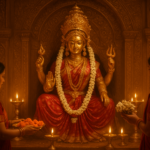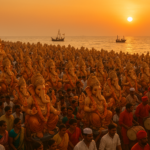


Radha Ashtami in Vrindavan is celebrated with great devotion and joy on the Ashtami (eighth day) of the Shukla Paksha (bright fortnight) in the month of Bhadrapada. This sacred day marks the appearance of Shri Radha Rani. On this day, devotees throng the lanes of Vrindavan and every temple overflows with a wonderful atmosphere of devotion.
Significance of Radha Ashtami
Shri Radha Rani is the supreme beloved and worshipful deity of Lord Shri Krishna. According to scriptures, worship of Shri Krishna is considered incomplete without Radha ji. The festival of Radha Ashtami holds special significance for devotees because this day celebrates the appearance of Shri Radha Rani. In Vrindavan, this festival is celebrated with exceptional grandeur because this is where the divine leelas (pastimes) of Radha-Krishna took place.
Radha ji is the embodiment of love and devotion. It is through Her grace that a devotee receives the darshan (sacred viewing) and love of Shri Krishna. According to tradition, worshipping Radha ji fills the devotee’s heart with selfless love and devotion.
Special Observances of Radha Ashtami in Vrindavan
On Radha Ashtami, the prominent temples of Vrindavan organize special decorations and programs. All temples including Banke Bihari Temple, Radha Raman Temple, Radha Vallabh Temple, and Prem Mandir adorn Radha Rani with flowers.
Special Temple Decorations
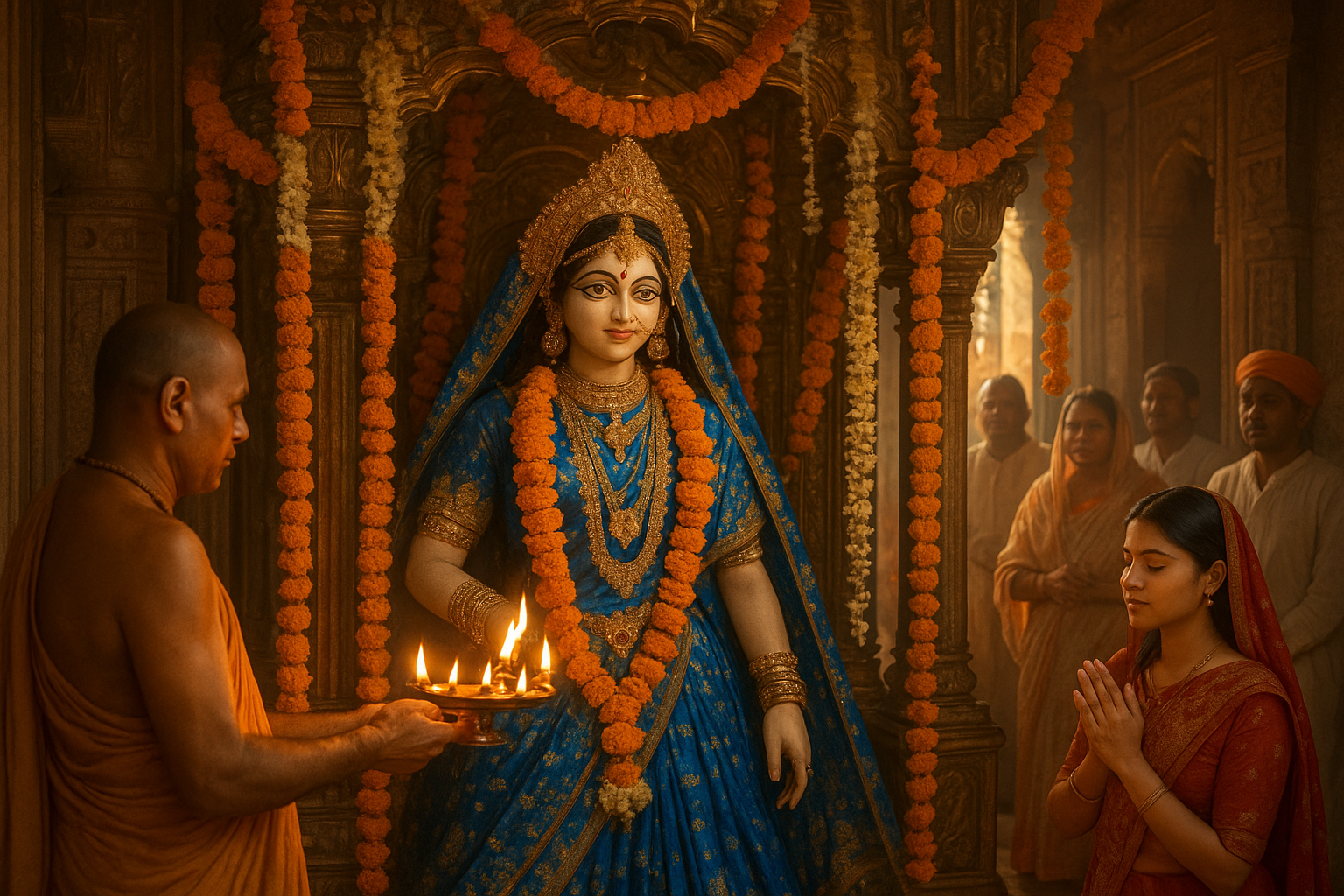
On this sacred day, the tableaux of Shri Radha Rani in temples are decorated in a most captivating manner. Radha Rani is adorned with garlands of fragrant flowers, colorful garments, and ornaments. Devotees begin arriving at temples from early morning, and bhajan-kirtan (devotional singing) continues throughout the day.
Devotee Participation
On Radha Ashtami, devotees observe a vrat (fast) and remember Lord Radha-Krishna throughout the day. Many devotees also perform Vrindavan parikrama (circumambulation). In the evening, temples organize special aarti (ritual of light) and bhog (sacred food offering).
Method of Observing Radha Ashtami Vrat
On Radha Ashtami, devotees bathe before sunrise and wear clean clothes. Worship is performed by lighting a lamp before the idol or picture of Shri Radha-Krishna at home or in a temple. Devotees offer flowers, sandalwood paste, incense, and naivedya (food offerings).
During the vrat, devotees consume only fruits and light foods throughout the day. Some devotees also observe nirjala vrat (waterless fast). The fast is broken only in the evening after participating in temple aarti and receiving prasad (blessed food). Singing bhajans of Radha-Krishna and listening to their leelas on Radha Ashtami is considered especially auspicious.
Cultural Aspect of Radha Ashtami in Vrindavan
Radha Ashtami in Vrindavan is not merely a religious festival but part of Braj’s cultural heritage. On this day, Raslila performances, tableaux, and devotional music programs are organized. Devotees and artists together present the divine leelas of Radha-Krishna.
According to Braj tradition, special sweets and prasad are prepared in temples on this day. Bhog of pede, laddu, and makhan-mishri (butter and sugar crystals) is offered. Special arrangements are made for distributing prasad among devotees.
Glory of Radha Rani
Shri Radha Rani is the hladini shakti (pleasure potency) of Shri Krishna. According to tradition, the simplest path to pleasing Shri Krishna is to receive Radha ji’s grace. Radha ji is extremely compassionate and is quickly pleased with Her devotees.
In Vrindavan Dham, the memories of Radha-Krishna’s love leelas remain vibrant even today. Every grove, every tree, and every ghat (riverbank) bears witness to their divine pastimes. On Radha Ashtami, devotees visit these sacred places and remember Shri Radha Rani.
Radha Ashtami in Other Places
Besides Vrindavan, Radha Ashtami is also celebrated with great enthusiasm in Barsana, Nandgaon, Govardhan, and Mathura. In Barsana especially, this festival is grand because it is considered the birthplace of Shri Radha Rani. Special worship and tableaux are organized in the temples there.
Throughout India, wherever Radha-Krishna temples exist, devotees celebrate this festival following the pattern of Radha Ashtami in Vrindavan. Devotees observe the vrat, sing bhajan-kirtan, and participate in temple aarti.
FAQ: Questions Related to Radha Ashtami
When is Radha Ashtami celebrated?
Radha Ashtami is celebrated on the Ashtami of Shukla Paksha in the month of Bhadrapada. It falls fifteen days after Shri Krishna Janmashtami.
How should one observe Radha Ashtami vrat?
Begin the Radha Ashtami vrat by bathing before sunrise. Consume only fruits throughout the day or observe nirjala vrat. Worship Radha-Krishna and break the fast after evening aarti by accepting prasad.
Which temples should one visit in Vrindavan on Radha Ashtami?
You can visit prominent temples such as Banke Bihari Temple, Radha Raman Temple, Radha Vallabh Temple, Prem Mandir, and Nidhivan. Special programs are organized in all these temples.
What are the benefits of Radha Ashtami vrat?
According to tradition, observing the Radha Ashtami vrat brings the grace of Shri Radha Rani. It fills the heart with devotion and love and brings peace and happiness in life.
Should one perform Vrindavan parikrama on Radha Ashtami?
Yes, many devotees perform Vrindavan parikrama on Radha Ashtami. It is considered highly meritorious. One should remember Radha-Krishna while performing parikrama.
Experience Divine Darshan with Durlabh Darshan
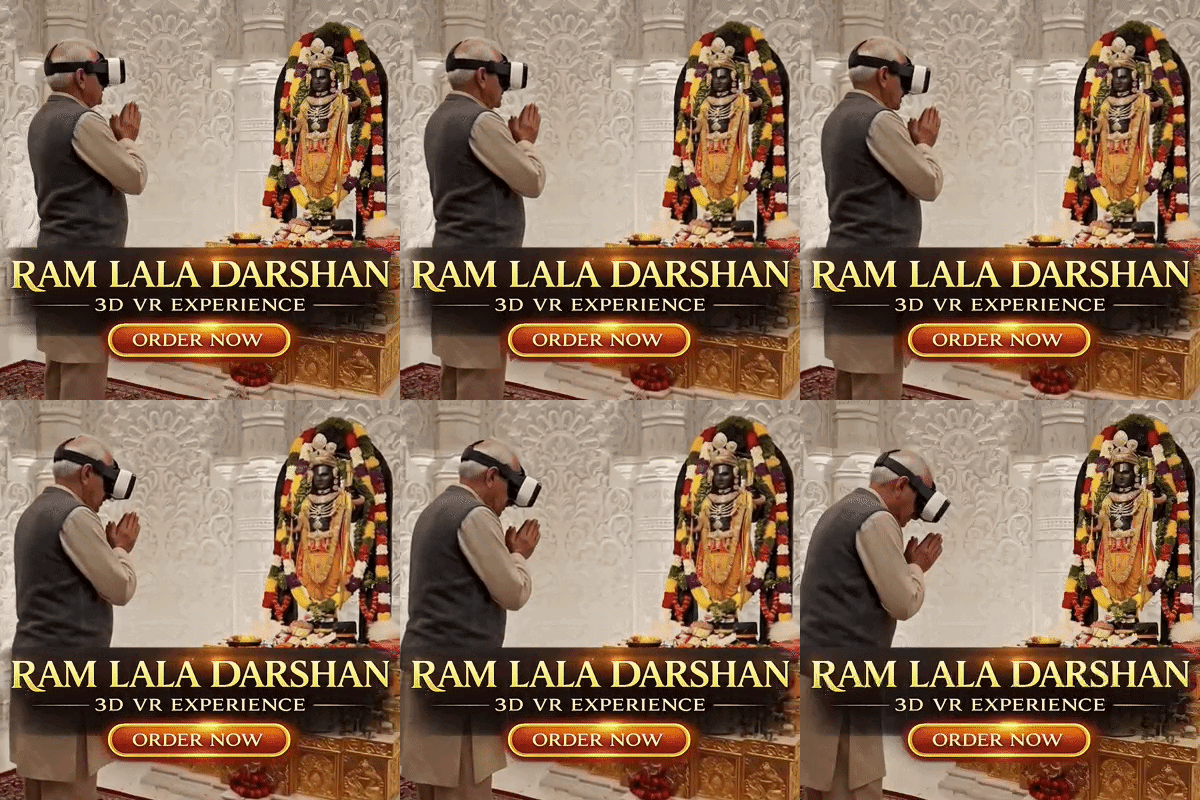
If you are unable to visit Vrindavan for Radha Ashtami this year, you can still have darshan of Vrindavan’s prominent temples from home through the Durlabh Darshan app. This AR/VR technology gives you the experience of divine temple tableaux and aarti. Certainly, a visit to Vrindavan has its own special significance, but when travel is not possible, this app offers you the blessing of Radha Rani’s darshan. Enjoy the bliss of temple darshan every day with Durlabh Darshan.
For More Information Visit :
Follow our social media handles for more such content