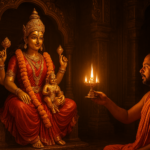


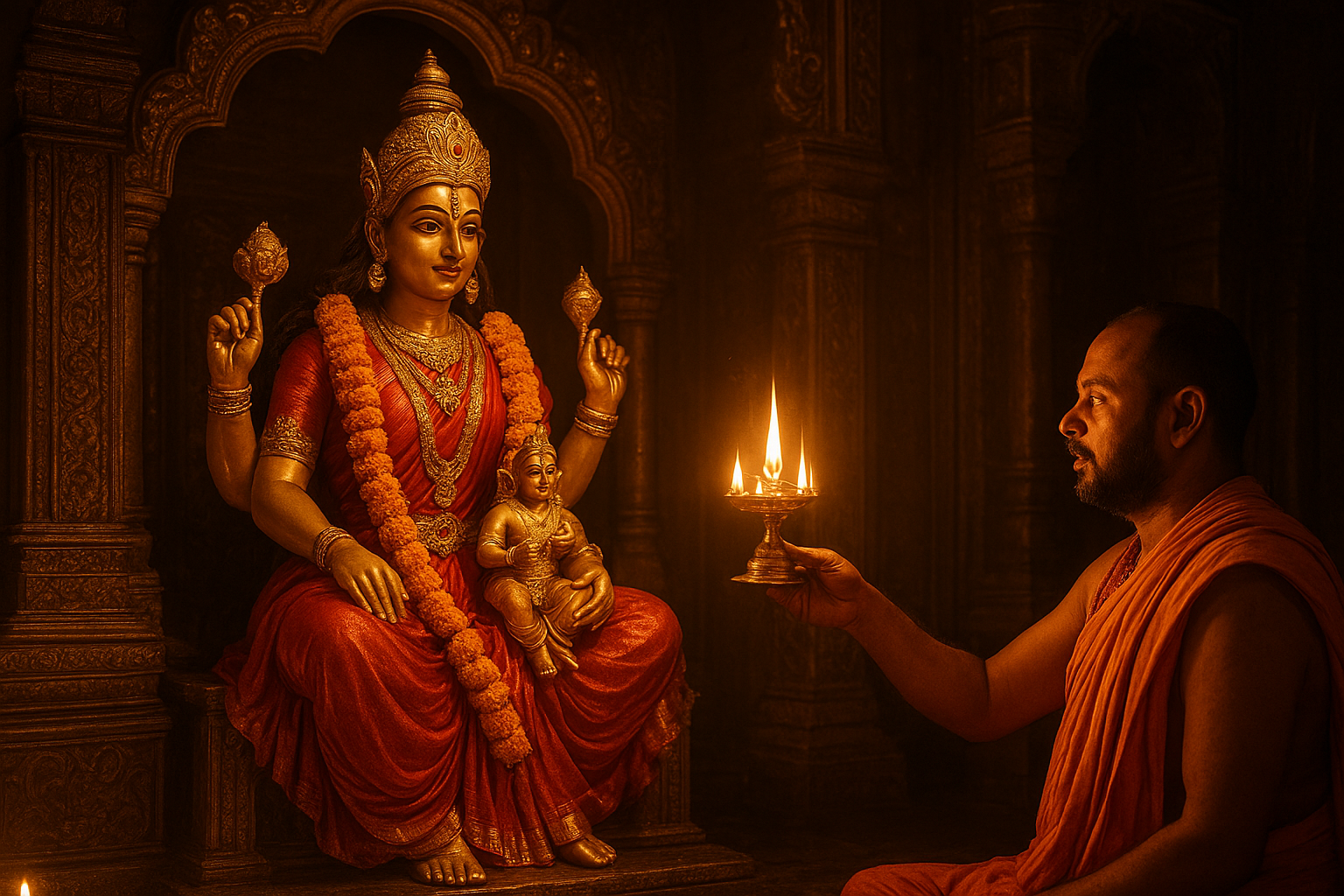
Skandamata ki aarti (the ritual of light) is the most important part of worshipping the fifth form of Maa Durga on the fifth day of Navratri. Maa Skandamata is the mother of Lord Kartikeya (Skanda), and her worship blesses devotees with the joy of children, moksha (liberation), and the fulfillment of all wishes. On Navratri Panchami, temples organize special maha aarti ceremonies.
The Divine Form and Significance of Maa Skandamata
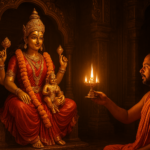
Maa Skandamata’s form is supremely divine and serene. She sits on a lotus seat, which is why she is also called Padmasana Devi. The Mother has four arms – two hands hold lotus flowers, one displays the gesture of blessing (varmudra), and one carries Lord Skanda in his infant form. Maa’s vahana (vehicle) is the lion, a symbol of strength and courage.
The fifth day of Navratri holds special significance for Maa Skandamata’s worship because devotees perform sadhana (spiritual practice) of the Vishuddha chakra on this day. With Maa’s grace, the seeker attains spiritual progress along with worldly happiness and prosperity.
The Method of Performing Skandamata Aarti
Before performing Skandamata ki aarti, purify Maa’s idol or picture with clean water. Then offer red cloth and adorn the deity. Maa is especially fond of yellow flowers, so worship with yellow blossoms.
During aarti, light a ghee or oil lamp. A lamp with five or seven wicks is considered best. Camphor is also used in aarti. The sounds of bell, conch, and dholak during aarti create a divine atmosphere.
Perform the aarti by rotating the lamp in a clockwise direction. First perform aarti of Maa’s feet, then the navel, then the face, and finally the entire form. After aarti, distribute prasad (blessed offering) without fail.
Traditional Skandamata Aarti Lyrics
While performing Maa Skandamata’s aarti, the following verses are sung:
Jai Maa Skandamata, Maiya Jai Maa Skandamata.
Padmasan hai sohe, Swami-Kumar angana rata.
Panchve Devi kahlani, Pancham Shakti karunamayee.
Sinh aswar Swami bhani, ratnajatit sheesh mukut sohe.
Rakt varn hai cholna, Swami, haath kamal ka phula.
Mata sut hit chintan kinha, dukh daridra nivaran kinha.
Vishwa vikhyat hai tribhuvan mein, Swami survar muni sevak.
Dhyan dhar sakal samadhi lagaye, jo yash gaye phal paye.
Maa sukh-samriddhi ka daani, har lo dukh abhimani.
Putra bhakti-dhan dhanya badhave, kripa kare to sab kuch aave.
Jai Maa Skandamata, Maiya Jai Maa Skandamata.
At the end of aarti, chant the victory call three times: Jai Maa Skandamata ki Jai.
Special Prasad for Skandamata Panchami
According to tradition, Maa Skandamata is especially fond of banana halwa. On Navratri Panchami, devotees specially prepare banana halwa to offer as bhog (sacred food offering) to Maa. This prasad is made using ripe bananas, ghee, sugar, and cardamom.
Besides banana halwa, Maa is also offered yellow sweets, yellow fruits, and dishes in yellow color. While preparing prasad, maintain special care for purity and devotion. After offering bhog, distribute prasad among all family members and neighbors as well.
Skandamata Maha Aarti in Temples
On Navratri Panchami, special maha aarti of Maa Skandamata is organized in temples across the country. Grand celebrations take place at numerous shakti peethas (sacred power sites), including Maa Van Durga Temple in Jharkhand. Large crowds of devotees gather to receive Maa’s darshan (sacred viewing) and participate in the aarti.
In temples, aarti is performed several times from the morning Mangala aarti to the night Shayan aarti. Afternoon and evening aartis see especially large crowds. Devotees come from far and wide to bow at Maa’s feet and make their wishes.
Benefits of Skandamata Worship
Devotees receive numerous benefits from Maa Skandamata’s aarti and worship. Childless couples receive the blessing of children. With Maa’s grace, children become healthy, intelligent, and long-lived.
Worship of Maa Skandamata removes worldly obstacles and brings peace to the mind. Progress comes in business and employment. Illness and grief are removed, and happiness and prosperity enter the home. By worshipping Maa with devotion on the fifth day of Navratri, seekers also rise spiritually.
Skandamata Vrat Vidhi in Navratri
Devotees observing a fast on the fifth day of Navratri should bathe in the morning and wear clean clothes. Yellow garments are considered auspicious on this day. During the fast, consume sattvic (pure) food and stay away from tamasic (impure) foods.
Meditate on Maa Skandamata throughout the day and chant her mantras. Maa’s beej mantra (seed mantra) is: “Om Hreem Kleem Skandamataye Namah.” Chanting this mantra 108 times brings special fruits. Perform Skandamata ki aarti in the evening and complete the fast by receiving prasad.
Frequently Asked Questions
When should Skandamata ki aarti be performed?
Skandamata ki aarti should be performed on the fifth day of Navratri, meaning Panchami tithi. The aarti can be done both morning and evening during the day, but evening aarti holds special significance.
What prasad should be offered to Maa Skandamata?
Banana halwa is Maa Skandamata’s most beloved prasad. Besides this, you can also offer yellow sweets, fruits, and yellow-colored dishes. Prasad should be prepared with purity and devotion.
Which color flowers should be offered in Skandamata worship?
Maa Skandamata is especially fond of yellow flowers. Offering marigolds, yellow roses, or other yellow blossoms pleases Maa.
What is Skandamata’s mantra?
Maa Skandamata’s beej mantra is – “Om Hreem Kleem Skandamataye Namah.” Chanting this mantra 108 times brings Maa’s special grace and fulfills wishes.
Can Skandamata ki aarti be performed at home?
Yes, Skandamata ki aarti can absolutely be performed at home with full devotion and proper method. Keep the home clean, install Maa’s idol or picture, and perform aarti regularly.
Experience Divine Darshan with Durlabh Darshan
If you are unable to visit temples during Navratri or wish to have Maa’s divine darshan from home, the Durlabh Darshan app is a beautiful option for you. This app, created with AR/VR technology, brings you darshan of famous temples across the country and various forms of Maa Durga from the comfort of your home. The actual pilgrimage certainly has its own importance, but when circumstances make travel impossible, you can experience Maa’s presence through Durlabh Darshan. For more information, visit the Durlabh Darshan website.
For More Information Visit :
Follow our social media handles for more such content