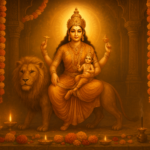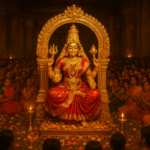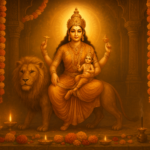


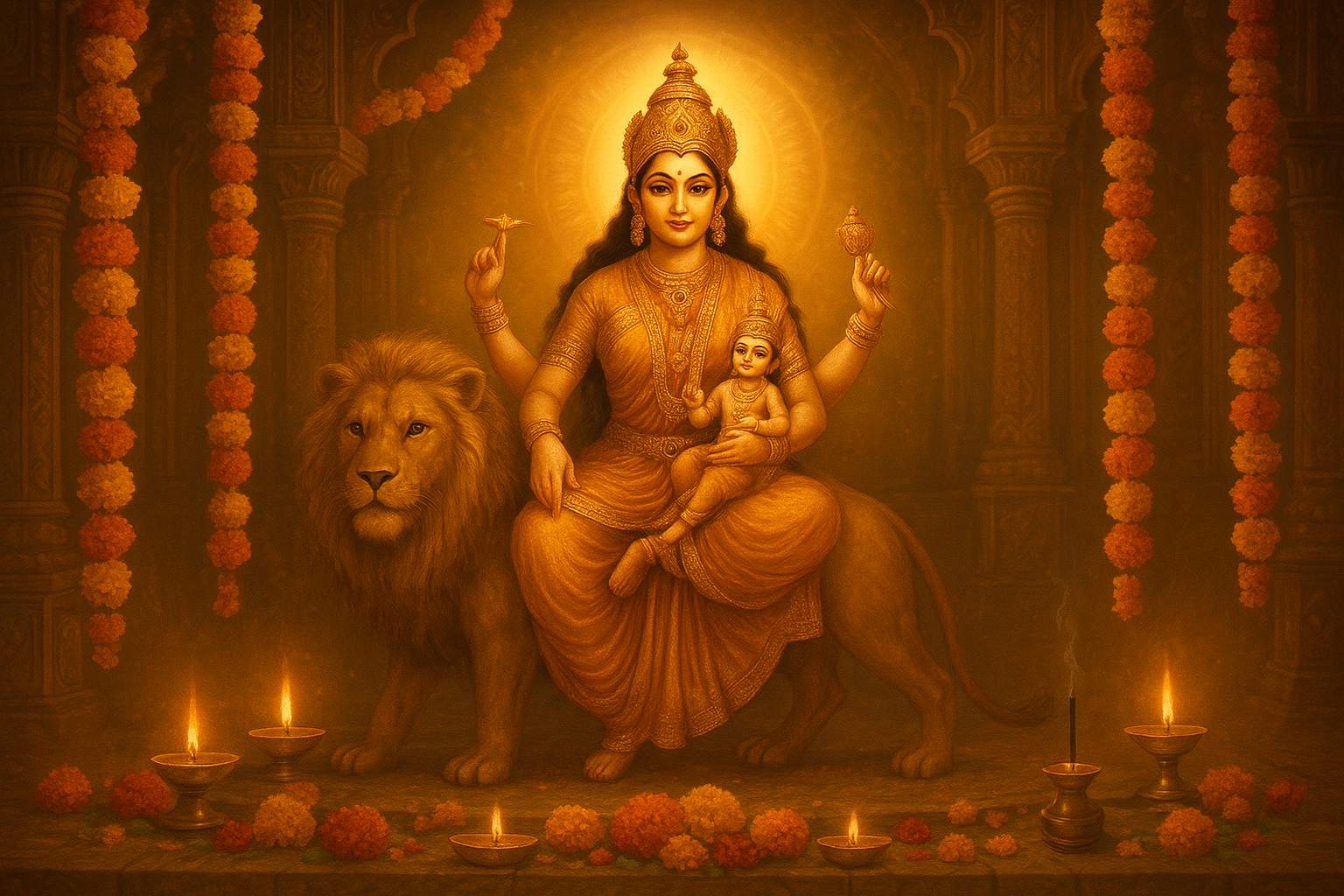
The fifth day of Navratri is dedicated to the worship of Maa Skandamata, the fifth form of Maa Durga. On this day, devotees worship Maa Skandamata and receive her blessings. Maa Skandamata is the mother of Lord Kartikeya (Skanda) and holds the infant Skanda in her lap.
Form of Maa Skandamata
The form of Maa Skandamata is supremely divine and serene. She sits upon a lion and has four arms. Two of her arms hold lotus flowers, one arm carries her son Skanda, and the fourth arm is held in varada mudra (the gesture of blessing). Maa’s complexion is radiant white, symbolizing peace and purity.
Because Maa Skandamata sits upon a lotus seat, she is also known as Padmasana Devi. Worshipping her brings devotees peace, prosperity, and the happiness of children.
Significance of the Fifth Day of Navratri
The worship performed on the fifth day of Navratri holds special importance. Worshipping Maa Skandamata on this day brings mental peace and the development of intellect. According to tradition, devotees who worship Maa Skandamata with reverence and devotion also receive the grace of Lord Kartikeya automatically.
The colour associated with this day is saffron or orange, which symbolizes energy and enthusiasm. Devotees wear saffron-coloured clothes and worship Maa on this day. This colour brings positive energy and spiritual strength.
Puja Vidhi (Worship Method) and Mantra
The puja on the fifth day of Navratri should be performed in the morning after bathing, with a pure mind. First, purify the idol or picture of Maa Skandamata with clean water. Then apply a tilak of sandalwood mixed with saffron and offer yellow or orange flowers.
Maa is especially fond of bananas, so offering bananas on this day is considered auspicious. Perform the aarti (the ritual of light) with incense, a lamp, and naivedya (food offering). During the puja, this mantra should be chanted:
Simhasanagata nityam padmashritakardvaya.
Shubhadastu sada devi Skandamata yashasvini.
Chanting this mantra pleases Maa and showers her blessings upon devotees.
Benefits Received from Maa Skandamata’s Grace
Worshipping Maa Skandamata brings numerous benefits to devotees. For those desiring the blessing of children, this day is especially fruitful. By Maa’s grace, childless couples receive children, and those with children receive the welfare of their offspring.
The puja performed on this day leads to the development of intellect, and students find success in their studies. Worship of Maa Skandamata brings positive thoughts to the mind and removes negativity. Devotees who take refuge in Maa with a sincere heart receive success in all areas of life.
Importance of Vrat (Fasting) and Upvas
The vrat on the fifth day of Navratri holds special importance. For devotees observing the nine-day fast, this day marks the completion of half the journey. On this day, new energy and enthusiasm are infused into the mind.
During the fast, devotees may consume falahar (fruit-based meals) or foods made from sabudana (tapioca pearls), water chestnut flour, potatoes, and milk. Those keeping the vrat should consume only pure and satvik (spiritually pure) food. During the fast, sendha namak (rock salt) should be used in place of regular salt.
Spiritual Significance
The worship of Maa Skandamata on the fifth day of Navratri also has deep spiritual significance. According to tradition, on this day the devotee’s consciousness becomes established in the Vishuddha chakra. This chakra is located near the throat, and its awakening increases a person’s spiritual power.
Through the worship of Maa Skandamata, a devotee gains purity and sweetness of speech. By her grace, divine qualities develop within the devotee and peace dwells in the mind. Devotees who regularly meditate upon Maa easily find the path to spiritual advancement.
Traditions Associated with the Fifth Day of Navratri
The fifth day of Navratri is celebrated with different traditions in various regions of India. In some places, kanya pujan (the worship of young girls) begins on this day, while in other places special havan (fire rituals) and yajnas are organized.
In many families, special aarti and bhajan (devotional songs) for Maa are arranged on this day. Devotees collectively sing Maa’s praises and describe her glory. On this day, temples are also specially decorated, and large crowds of devotees gather.
Frequently Asked Questions
Which goddess is worshipped on the fifth day of Navratri?
On the fifth day of Navratri, Maa Skandamata, the fifth form of Maa Durga, is worshipped. She is the mother of Lord Kartikeya and holds him in her lap.
What bhog (offering) should be given to Maa Skandamata?
Maa Skandamata is especially fond of bananas. Additionally, panchamrit, kheer, halwa, and seasonal fruits can also be offered. Sandalwood mixed with saffron and yellow or orange flowers should also be offered.
What is the colour of the fifth day of Navratri?
The colour of the fifth day of Navratri is saffron or orange. This colour symbolizes energy and enthusiasm, and devotees wear clothes of this colour on this day.
What benefits are received from worshipping Maa Skandamata?
Worshipping Maa Skandamata brings devotees the happiness of children, development of intellect, mental peace, and success in life. By her grace, all wishes are fulfilled.
Is it necessary to keep the vrat on the fifth day of Navratri?
The nine-day vrat of Navratri has its own special importance, but it depends upon individual faith. Devotees who can keep the vrat with reverence should certainly do so. Those who cannot keep a full fast may observe falahar.
Experience Divine Darshan with Durlabh Darshan
If you cannot reach a temple, you can have darshan (sacred viewing) of various temples of Maa Durga from your home through the Durlabh Darshan app. This AR/VR-based app provides virtual darshan of sacred temples, allowing you to experience Maa’s presence in your own home. You can download the Durlabh Darshan app here and receive the benefit of Maa’s divine darshan during this sacred festival of Navratri.
For More Information Visit :
Follow our social media handles for more such content