

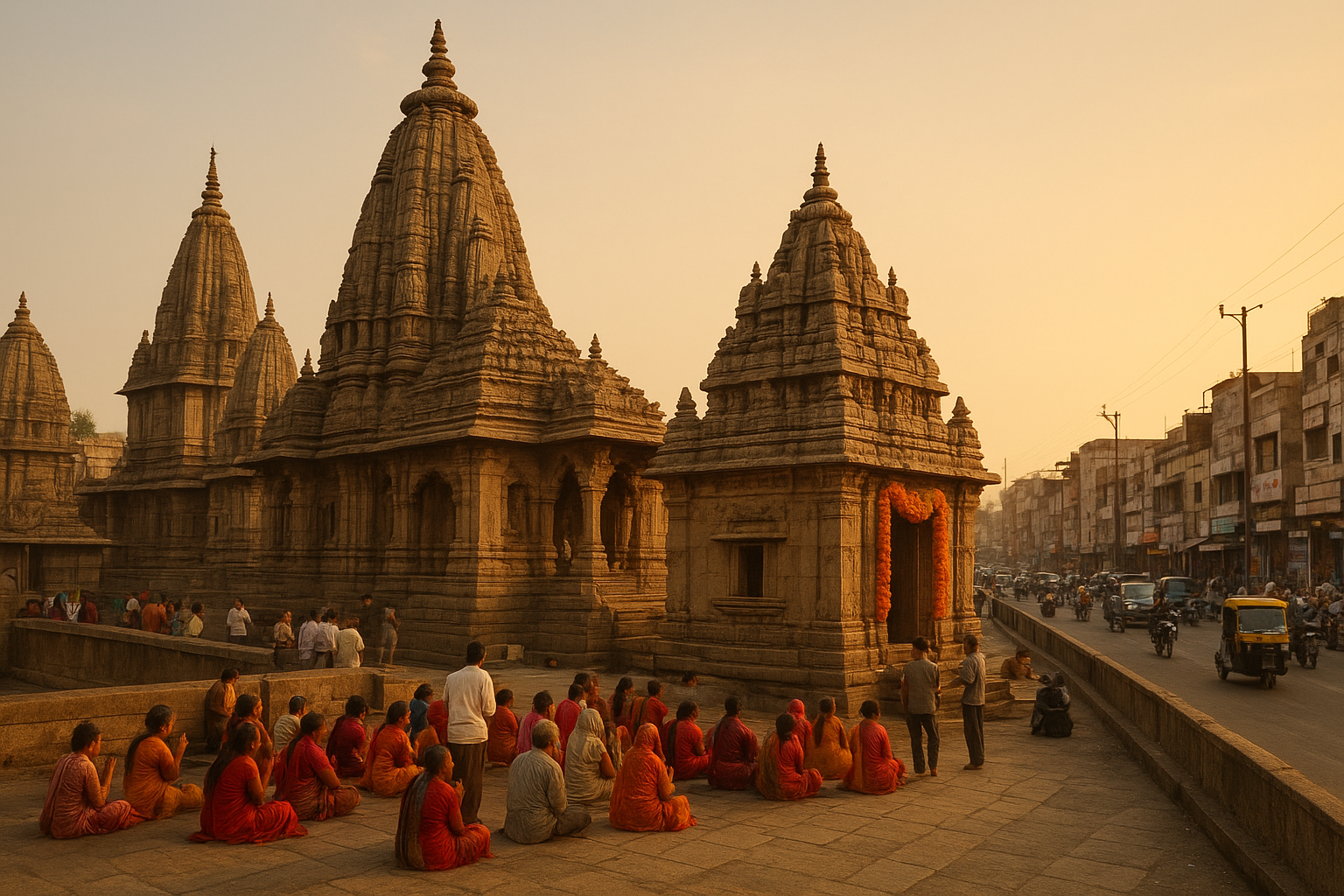
Priests and local devotees in Ujjain have expressed deep concern over road widening plans that could affect more than two dozen temples in the city. The temple priests have made it clear that they will not accept projects that repeatedly damage sacred sites, and are prepared to launch a movement if no suitable solution is found.
Ujjain: The Spiritual Capital of Sanatan Dharma
Ujjain is an ancient and sacred city in Madhya Pradesh, known as the abode of Lord Shiva in his Mahakal form. It is one of the seven holy cities (saptapuris) and home to the famous Mahakaleshwar Jyotirlinga. The city’s narrow lanes and pathways are lined with hundreds of small and large temples that have been centers of devotion for centuries.
Every twelve years, Ujjain hosts the Simhasth Kumbh, drawing crores of pilgrims who come to bathe in the sacred Shipra River. In this holy city, every lane and every corner holds small temples and sacred sites that are integral to the faith and tradition of the local community.
Road Widening Plan and the Threat to Temples
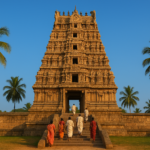
Under modern urban development plans, a proposal has been put forward to widen roads in Ujjain. The aim of this project is to create better infrastructure for increasing traffic and the convenience of pilgrims. However, in this process, more than two dozen temples have come under the purview of road widening.
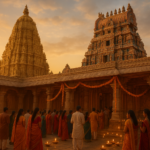
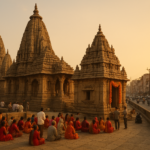
These temples are mostly located along roadsides or at intersections. Some temples are centuries old and serve as symbols of deep faith for the local community. Many of these temples see regular worship and devotees come for darshan daily.
Concerns and Demands of the Priests
Temple priests and local religious organizations have raised serious objections to this issue. They say that temples are repeatedly being damaged in the name of development, while no effort is made to find alternative solutions.
The main demands of the priests are as follows:
Protection of Temples: All affected temples should be preserved in their original state or saved from demolition.
Alternative Routes: Alternative routes should be considered for road widening so that temples are not harmed.
Proper Relocation: If relocation of any temple becomes unavoidable, it should be done according to scriptural rituals (shaastraukt vidhi) and with community consent.
Respect for Religious Traditions: Local religious sentiments and traditions should be given priority when planning projects.
The priests have issued a clear warning that if the administration does not listen to them and does not take appropriate steps to protect the temples, they will be compelled to launch a peaceful movement.
Ujjain Temple Road Widening: Finding Balance Between Faith and Development
This dispute raises a significant question—is balance possible between development and faith? In India’s ancient cities, this problem is often seen where the needs of modern development collide with centuries-old religious heritage.
Experts believe that both objectives can be achieved through sensitive planning. In many cities, religious sites have been saved by altering road designs, widening roads on one side only, or creating underground passages.
The Importance of Religious Sentiments
In Hindu tradition, temples are not merely buildings—they are considered the dwelling places of deities. When an idol is consecrated in a temple through pran pratishtha (the ritual of inviting the divine presence), that place is regarded as extremely sacred. Demolishing or damaging such a site deeply hurts the sentiments of devotees.
In a pilgrimage city like Ujjain, every temple has its own history and significance. Even small temples hold immense importance for the local community because generations have worshipped there.
Toward a Solution
To resolve this sensitive issue, all stakeholders—the administration, priest community, local residents, and experts—must come together for dialogue. Some possible solutions could be:
Alter road designs to save temples. Technically, it is often possible to divert the road slightly or widen it from one side to meet requirements.
Create special protection zones around temples and adapt the road plan accordingly.
If relocation becomes unavoidable, carry out the work only with full observance of religious rituals and with the consent of priests and devotees.
Include the local community in the planning process so that a solution acceptable to all parties can be found.
Frequently Asked Questions
What is the Ujjain temple road widening dispute?
The road widening plan in Ujjain is affecting more than two dozen temples. Priests have opposed this and warned of a movement demanding the protection of temples.
How many temples may be affected by road widening?
According to reports, more than two dozen small and large temples could come under the purview of this plan. These temples are located on main roads and intersections.
What is the main demand of the priests?
The main demand of the priests is that development plans should be made without damaging temples. They want alternative routes or technical solutions that ensure the protection of temples.
Is balance possible between development and religious sites?
Yes, this balance is possible through sensitive planning and technical expertise. Options such as changes in road design, underground routes, or one-sided widening can be adopted.
What is the significance of temples in Ujjain?
Ujjain is the city of Lord Mahakal and one of the seven sacred pilgrimage cities. Every temple here carries the deep faith of the local community and has seen centuries of worship.
Experience Divine Darshan with Durlabh Darshan
If you are unable to visit the sacred temples of Ujjain or other divine religious sites across the country, the Durlabh Darshan app brings the darshan experience to your home. Through AR/VR technology, you can have darshan of Mahakaleshwar and many other renowned temples. This app is not a replacement for physical pilgrimage but a companion for devotees who, for various reasons, cannot visit temples. Give new direction to your devotion and download the Durlabh Darshan app.
For More Information Visit :
Follow our social media handles for more such content