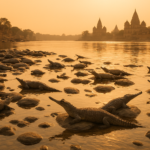


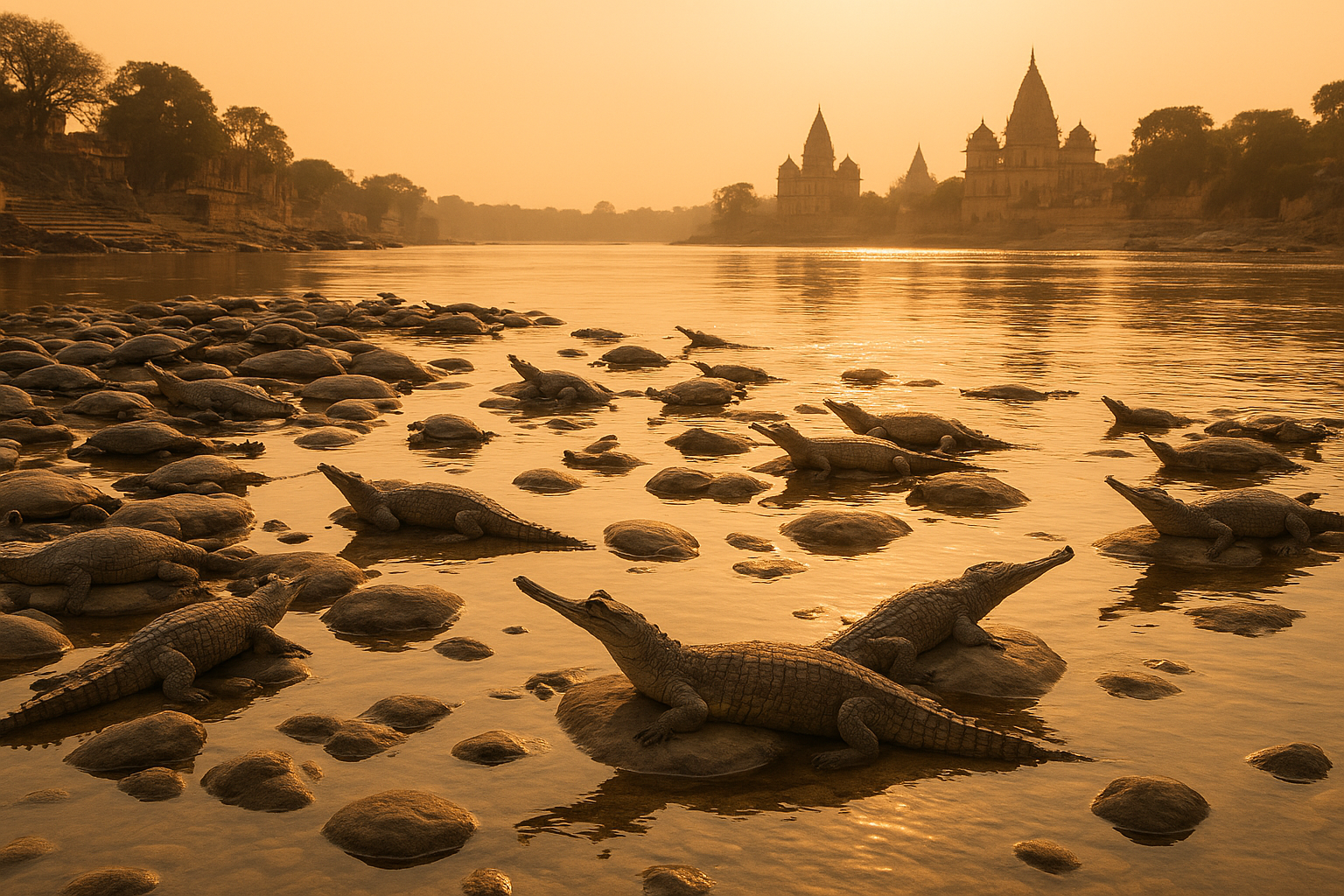
The Indian government’s plan to release turtles into the Ganga was a unique initiative that sought to harness nature’s power to clean the sacred river. This project began in the mid-1980s, when rising pollution and the problem of partially cremated remains in the Ganga were becoming increasingly serious.
The Sanctity and Challenges of Ganga
Ganga Maa is considered the most sacred river in Hindu dharma. Millions of devotees bathe in this holy river and immerse the ashes of their loved ones. According to tradition, immersion in Ganga ji’s waters grants moksha (liberation).
But with growing population and industrial development, the pollution of the Ganga became a matter of great concern. The river faced increasing problems with partially burned bodies, waste, and industrial refuse. Maintaining the purity of this sacred river became a major challenge.
Why Choose Flesh-Eating Turtles?
In the 1980s, the government formulated a plan to release turtles into the Ganga. The idea behind this project was that flesh-eating turtles would naturally clean the river by consuming the organic waste and partially cremated remains present in it.
According to tradition, in ancient times the Ganga had a large population of turtles that helped maintain the river’s cleanliness. Over time, their numbers had declined. The government thought that by releasing approximately 25,000 turtles, the natural balance could be restored.
The Project Begins
This project was primarily centered in sacred cities like Varanasi, where the number of devotees at the ghats is very high. The turtles released in the Ganga were specifically chosen because they were a carnivorous species and suited to the river’s environment.
Government officials released these turtles at various locations along the river. The hope was that these turtles would breed and increase their numbers, thereby maintaining the river’s cleanliness over the long term.
Results of the Project
Unfortunately, this project did not achieve the expected success. Many turtles were caught by local people. Some killed them for food, while others kept them as pets. Turtles also began to be sold in markets.
The river’s increasing pollution also became an obstacle to the turtles’ survival. Industrial waste and chemical pollution degraded the water quality so severely that many turtles could not survive.
This effort made it clear that natural measures alone are not sufficient. Comprehensive efforts and public awareness are needed for the cleaning of the Ganga.
Turtles in the Ganga: The Modern Situation
Even today, some species of turtles are found in the Ganga, but their numbers are limited. Wildlife conservation organizations are working to protect these turtles. Hunting and trading turtles is illegal, but in some areas this problem persists.
For cleaning the Ganga, the government is now running various schemes. Projects like Namami Gange are working to make the river clean. Sewage treatment plants, ghat cleaning, and efforts to stop industrial pollution are being implemented.
The Importance of Natural Balance
This project teaches us that every creature has an important place in nature. According to tradition, the Ganga is a living river in which countless creatures reside. All of these have a balance that maintains the river’s cleanliness and health.
Like turtles, fish, dolphins, and other aquatic creatures also play important roles in the river. When we pollute the river, we harm this entire ecosystem.
Turtles in the Ganga and Faith
In Hindu dharma, the turtle is a symbol of Bhagwan Vishnu’s Kurma avatar (the tortoise incarnation). In the story of Samudra Manthan (the churning of the ocean), Lord Kurma bore Mount Mandara on his back. Therefore, the turtle is considered a symbol of patience, stability, and protection.
Many devotees consider the presence of turtles in the Ganga to be auspicious. These creatures are part of the river’s natural balance, and protecting them is our dharma.
Our Responsibility
Serving Ganga Maa is not limited to bathing and worship alone. Keeping the river clean, protecting the creatures living in it, and not spreading pollution are also our responsibilities. The conservation of creatures like turtles in the Ganga is essential for the river’s health.
Every devotee should resolve not to spread any filth in the Ganga. Do not throw plastic, flower garlands, or other non-biodegradable materials into the river. Service to the Ganga is true devotion.
Frequently Asked Questions
Why were turtles released into the Ganga?
In the 1980s, the Indian government released approximately 25,000 flesh-eating turtles for the cleanliness of the Ganga. It was hoped that these turtles would naturally clean the river by consuming the organic waste and partially cremated remains present in it.
Why did this project not succeed?
The project failed mainly because many turtles were caught or killed by local people. Increasing water pollution also made it difficult for the turtles to survive.
Are turtles still found in the Ganga today?
Yes, some species of turtles are still found in the Ganga, but their numbers are very low. Wildlife conservation organizations are working to protect them.
Why is the turtle important in Hindu dharma?
The turtle is a symbol of Bhagwan Vishnu’s Kurma avatar. During Samudra Manthan, Lord Kurma bore Mount Mandara, so the turtle is considered a symbol of patience and stability.
How can we contribute to cleaning the Ganga?
Do not throw any garbage or plastic into the Ganga. Cooperate in cleaning the ghats. Do not harm the creatures living in the river. Remain aware of water conservation and cleanliness.
Experience Divine Darshan with Durlabh Darshan
If you cannot physically travel to the Ganga ghats, you can have darshan of the sacred ghats and temples from home through the Durlabh Darshan app. This app uses AR/VR technology to give you an experience of pilgrimage sites. Without doubt, an actual pilgrimage has its own significance, but for devotees who cannot travel, this is a beautiful option.
For More Information Visit :
Follow our social media handles for more such content