

The significance of Mahalaya Shraddh in Hindu dharma runs very deep, as it offers liberation from pitru rinn (ancestral debt) and brings peace to the souls of our forefathers. The final day of Pitru Paksha is called Mahalaya Amavasya or Sarva Pitru Amavasya, when shraddh is performed for all ancestors. This day is especially important for those who do not know the exact death anniversary of their forebears.
Pitru Paksha and Mahalaya Amavasya
Pitru Paksha begins on the full moon (purnima) of the Bhadrapada month and continues until the new moon (amavasya). During these sixteen days, Hindu families remember their departed ancestors and perform shraddh for the peace of their souls. Mahalaya Amavasya is the final and most significant day of this period.
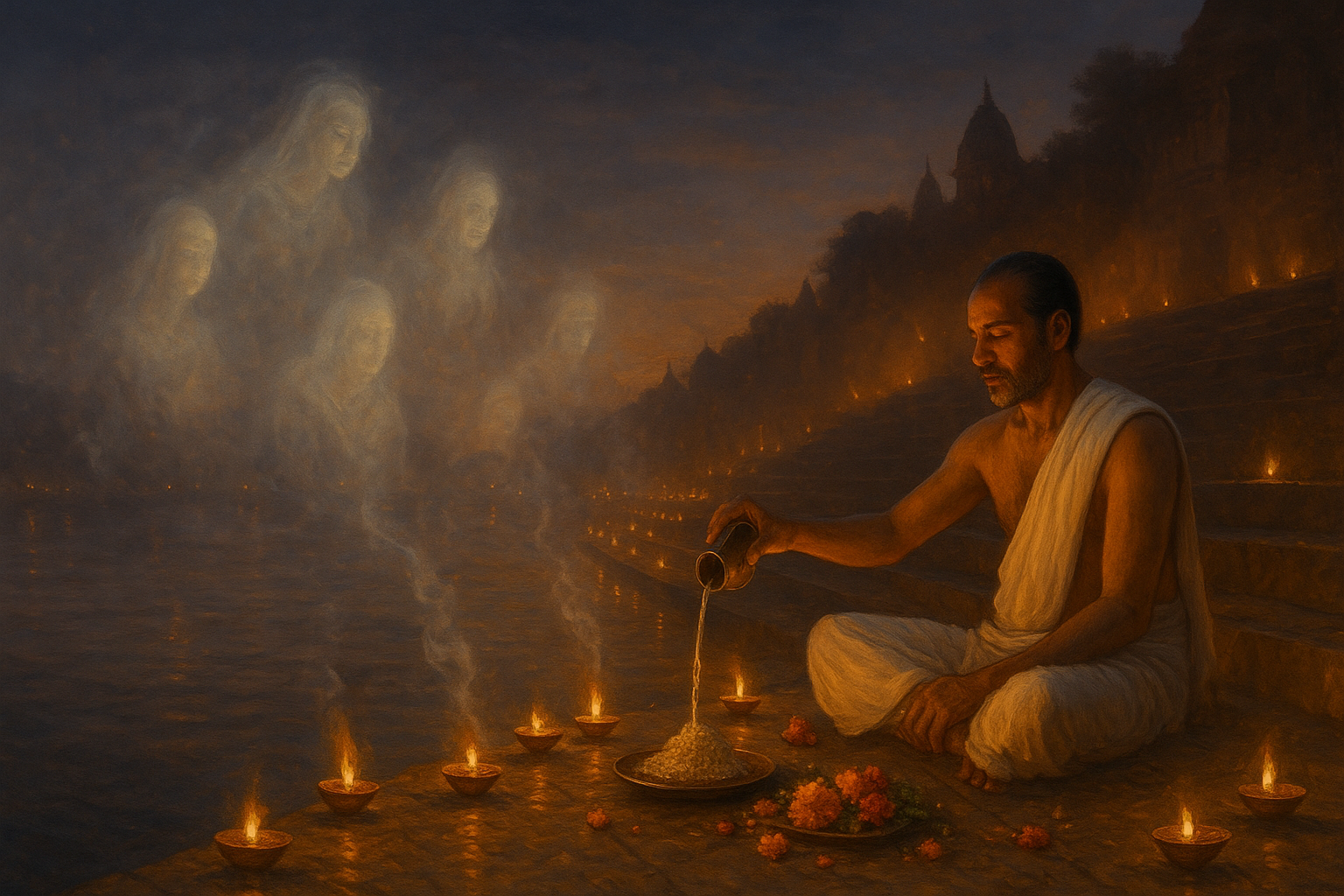
According to tradition, during Pitru Paksha the ancestors descend from Yamalok to earth and expect shraddh and tarpan (water offerings) from their descendants. Performing shraddh for all ancestors together on Mahalaya Amavasya brings collective peace to their souls.
Why Mahalaya Shraddh Holds Significance
The scriptures describe three types of debts: dev rinn (debt to the divine), rishi rinn (debt to the sages), and pitru rinn (debt to ancestors). Our parents and forefathers gave us life and nurtured us, so we have a duty toward them. Through shraddh, we repay this debt.
For those whose ancestors’ death dates are not known, Mahalaya Amavasya is a precious opportunity. On this day, shraddh for all ancestors can be performed together. It is believed that shraddh performed on this day yields the same merit as sixteen days of shraddh.
The Method of Mahalaya Shraddh
Mahalaya Shraddh is performed in a state of purity after bathing in the morning. According to tradition, the eldest male member of the household, or with the assistance of a pandit ji, completes this rite.
In shraddh, tarpan is offered with black sesame seeds, barley, kusha grass, and water. Feeding Brahmins in the name of the ancestors holds special importance. Kheer, poori, vegetables, and sweet dishes are prepared. There is also a tradition of offering food to cows, dogs, and crows.
During tarpan, water is offered while taking the names of the ancestors and praying for their peace. Giving dakshina (an offering of money or gifts) is also an essential part of shraddh.
Points to Keep in Mind During Shraddh
The significance of Mahalaya Shraddh is fulfilled only when it is performed with the right spirit and proper method. During shraddh, the mind must hold reverence and respect for the ancestors.
On this day, purchasing new items, performing auspicious activities, and celebrating are considered forbidden. One should live with restraint and simplicity during Pitru Paksha. Avoid tamasic foods such as garlic and onion.
Tulsi is not added to shraddh food because Tulsi ji is dear to Lord Vishnu, and there is a separate method for the ancestors. The use of bronze or brass vessels is considered best.
Beliefs Associated with Shraddh
According to tradition, performing shraddh pleases the ancestors, and they bless the family. The grace of the ancestors brings happiness and prosperity to the home and protects the children.
If for some reason shraddh cannot be performed at home, going to pilgrimage places like Gaya, Prayagraj, or Haridwar and offering pind daan is considered highly meritorious. Pind daan at the Vishnupad Mandir in Gaya holds special significance.
In many families, tarpan is also performed under a peepal tree. Tarpan is offered facing south, mixing sesame seeds, barley, and kusha grass in water.
Shraddh in Modern Times
In today’s busy life, many people are unable to perform shraddh with full rituals. In such cases, ancestors can also be remembered in simple ways. Keeping reverence in the heart while doing charity, feeding the poor, and remembering the ancestors is also important.
Those who live far away or are unable to visit a temple for any reason can perform tarpan at home with a sacred spirit. The significance of Mahalaya Shraddh lies in devotion and reverence, not merely in outward display.
The Arrival of Navratri After Mahalaya
The day after Mahalaya Amavasya, Sharadiya Navratri begins. With the conclusion of Pitru Paksha, Devi Paksha commences. This transition symbolizes moving from darkness to light, from farewell to welcome.
After bidding farewell to the ancestors, devotees become absorbed in the worship of Maa Durga. This balance reflects the beauty of Hindu dharma, where both death and life, farewell and welcome, receive honour.
Frequently Asked Questions
When does Mahalaya Amavasya occur?
Mahalaya Amavasya falls on the new moon of the Krishna Paksha in the month of Bhadrapada. It is the final day of Pitru Paksha, and Navratri begins the following day.
Can Mahalaya Shraddh be performed at home?
Yes, Mahalaya Shraddh can be performed at home. After bathing and purifying yourself, perform tarpan, feed a Brahmin, and give charity and dakshina. If full rituals are not possible, you can also perform it in a simple manner with reverence.
What should one do if the ancestors’ death dates are not remembered?
If you do not remember the death date of your ancestors, perform their shraddh on Mahalaya Amavasya. On this day, collective shraddh for all ancestors is performed, and it is considered fully fruitful.
Why is food offered to crows in Mahalaya Shraddh?
According to tradition, the crow is considered the representative of the ancestors. It is believed that food reaches the ancestors through the crow. Therefore, in shraddh, food is first offered to crows.
Can women perform shraddh?
Traditionally, male members perform shraddh, but if there is no male in the family, women can also perform this rite with reverence. The significance of Mahalaya Shraddh lies in devotion and reverence.
Experience Divine Darshan with Durlabh Darshan
Devotees who are unable to travel to pilgrimage sites due to distance or other reasons can experience darshan (sacred viewing) of divine temples from home through the Durlabh Darshan app. This app uses AR/VR technology to place you in front of temples. While it cannot replace an actual pilgrimage, it helps keep your devotion alive when travel is not possible. Download the Durlabh Darshan app and experience divine darshan.
For More Information Visit :
Follow our social media handles for more such content