

Sita Navami 2026
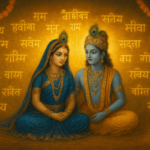
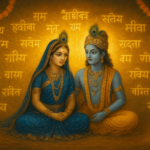
Sita Navami is one of the most revered observances in the Hindu calendar, celebrated as the appearance day of Goddess Sita, also known as Janaki. In 2026, Sita Navami will be observed on Saturday, April 25. According to the traditional Hindu calendar for New Delhi, it falls on the Navami tithi of Shukla Paksha in the month of Vaishakha, and the recommended midday worship window is from 11:01 AM to 1:38 PM.
This sacred day is not only a celebration of the birth of Mother Sita, but also a spiritual reminder of purity, patience, dignity, inner strength, faith, sacrifice, and unwavering righteousness. In Hindu tradition, Sita is not remembered merely as the consort of Lord Rama. She is revered as an ideal of grace under suffering, steadfastness under trial, and holiness in every circumstance. The festival of Sita Navami therefore carries both devotional sweetness and profound philosophical meaning.
Sita Navami is sometimes also called Janaki Navami, because Sita is the daughter of King Janaka. The day is especially important for devotees of Sri Ram and Sita, for families who seek peace and virtue in domestic life, and for those who look to the Ramayana for guidance in moral and spiritual living. Temples and homes observe the day with fasting, prayers, recitation of sacred texts, and worship of Sita-Ram together. Traditional observance especially favors worship during the madhyahna period, because Sita is believed to have manifested during the midday time.
What makes Sita Navami spiritually unique is that it celebrates a divine feminine ideal rooted not in power through domination, but in strength through truth, restraint, compassion, and spiritual endurance. Mother Sita is one of the most loved figures in Indian devotional life because she represents a kind of greatness that is quiet yet immeasurable. Her life is not defined by ease, but by the radiance with which she moves through hardship. In that sense, Sita Navami is not only a festival of remembrance, but also a day of deep reflection.
The date and observance of Sita Navami in 2026
In 2026, Sita Navami will be celebrated on April 25, a Saturday. Panchang-based observance places it in Vaishakha Shukla Navami. For New Delhi, the midday puja muhurta is listed from 11:01 AM to 1:38 PM, and this time is considered especially important for ritual worship.
This timing matters because many traditional Hindu festivals are observed not only by date, but also by the specific tithi and the spiritually preferred portion of the day connected with the event. In the case of Sita Navami, the madhyahna period is especially significant, and many devotees prefer to perform puja, recitation, or vrata during this sacred interval.
Who is Mother Sita?
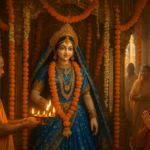
Mother Sita is one of the central figures of the Ramayana and one of the most revered women in the Hindu spiritual imagination. She is known by many names, including Sita, Janaki, Vaidehi, and Maithili. Janaki signifies her relationship to King Janaka, while Vaidehi points to Videha, the kingdom associated with her family lineage. In devotional worship, she is inseparable from Lord Rama, and together they represent divine order, harmony, and dharma in family and society. Her remembrance is central to many traditions of Ram bhakti.
Traditional tellings describe her as not born in an ordinary way, but discovered by King Janaka while ploughing the earth. Because of this, she is closely associated with Bhumi, the Earth Goddess. This origin gives her a symbolic and spiritual dimension beyond royal identity. She embodies fertility, grace, purity, nourishment, patience, and sacred strength. Her connection to the earth also helps explain why she is honored not merely as a queen, but as a universal mother figure. While this association is deeply rooted in the Ramayana tradition and broader Hindu understanding, Sita Navami specifically commemorates her appearance as Janaka’s daughter and the divine feminine ideal worshipped across Hindu households.
Why Sita Navami matters
Sita Navami is important because it centers devotion on one of the purest and most spiritually powerful figures in Hindu tradition. In many festivals, the emphasis falls on victory, miracles, cosmic power, or divine intervention. Sita Navami is different. Its emotional and spiritual heart is gentleness, endurance, sanctity, and moral radiance.
Mother Sita stands for values that remain relevant in every age: truthfulness, self-respect, devotion without weakness, patience without passivity, and love without loss of inner dignity. She is remembered not because she lived an easy life, but because she remained rooted in dharma through every trial. For this reason, Sita Navami continues to speak not only to religious faith, but also to ethical and emotional life.
This day is especially meaningful for those who seek harmony in family life, purity in thought, emotional resilience, and a deeper connection with the Ramayana’s moral universe. In many homes, devotees worship Sita-Ram together and pray for peace, stability, righteous relationships, and inner strength. Traditional observance connects the day with fasting, puja, and recitation of the Ramayana or hymns dedicated to Sita and Rama.

The spiritual symbolism of Mother Sita
Sita’s life carries layers of symbolism. On the surface, she is a queen, a wife, and a central figure in an epic. But at a deeper level, she represents the soul’s purity amidst the world’s turbulence. She is the ideal of inward steadiness. She suffers exile, separation, suspicion, and trial, yet she is never spiritually broken. This is why her life is not seen as tragic in the devotional sense, but luminous.
Her name is associated with purity, but her purity is not merely ritual. It is the integrity of someone who remains untouched inwardly by outward suffering. She is associated with devotion, but her devotion is not self-erasure. It is conscious, strong, and rooted in truth. She is associated with patience, but not weakness. Her endurance comes from inner strength and moral clarity.
For many devotees, Sita is the model of divine femininity not because she fits into a narrow human role, but because she transcends ordinary human categories. She is tender and strong, silent and powerful, obedient to dharma and yet deeply sovereign in spirit. That is why Sita Navami is such a profound festival. It reminds devotees that spiritual greatness can wear the form of humility.
Sita and the ideal of dharma
One of the deepest reasons Sita Navami is important is that Mother Sita’s life is inseparable from the idea of dharma. She does not simply speak dharma; she lives it through difficult choices. In the forest, in captivity, in public trial, and in separation, she remains connected to truth. In the Ramayana tradition, this makes her not merely a participant in dharma, but one of its purest embodiments.
Her relationship with Lord Rama is central here. Sita-Ram together symbolize an ideal of sacred harmony. Their union is not just romantic or domestic; it reflects the integration of virtue, order, love, dignity, and divine purpose. In many devotional traditions, their names are invoked together because the remembrance of Rama is enriched by the tenderness and purity of Sita, and the remembrance of Sita is complete in union with Rama.
This is why on Sita Navami, devotees do not usually worship Sita in isolation from her spiritual context. They remember her as Janaki, as Vaidehi, and as Sita-Ram’s inseparable divine presence. The festival becomes a day to reflect on what righteous love looks like, what strength rooted in purity looks like, and what divine companionship means.
The role of Sita in devotional life
In many Hindu homes, Mother Sita is loved with a feeling that is both intimate and reverential. She is not approached as a distant cosmic figure, but as a compassionate and pure mother whose life understands human sorrow. Many devotees feel emotionally close to her because her life contains so much suffering, and yet so much grace. She knows exile, uncertainty, longing, and injustice. For this reason, people turn to her in times of emotional struggle, family pain, and moral confusion.
Sita Navami gives expression to this devotional bond. It is a day when her compassion, purity, and silent strength are specially remembered. Women often see in her an example of spiritual dignity. Men may see in her a standard of sacred respect and moral responsibility. Families may see in her a source of blessing for peace and virtue in the home. Devotees of Rama may see in her the heart of Ram bhakti itself.
How Sita Navami is observed
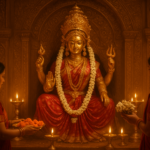
On Sita Navami, devotees generally begin the day with a bath, clean clothing, and a resolved devotional attitude. Many keep a fast or observe dietary restraint according to tradition and personal health. Homes and temples may arrange a special altar for Sita-Ram, decorate the image with flowers, offer fruits and sweets, light lamps, and perform puja during the recommended midday period. The traditional midday worship window for 2026 in New Delhi is 11:01 AM to 1:38 PM.
It is also common to read or listen to passages from the Ramayana, especially episodes connected with Sita’s birth, marriage, exile, and devotion. Some devotees recite Sita stutis, Ram bhajans, or the names of Sita-Ram. Others may perform kirtan or simply spend the day in quiet remembrance. Fasting on Ekadashi-like lines is not universal here, but vrata, sattvic conduct, and prayerful observance are all common devotional features.
A beautiful aspect of this observance is its simplicity. Sita Navami does not require grandeur to be meaningful. A lamp, clean water, flowers, Tulsi if offered with Rama, a sacred text, and a sincere heart are enough to turn the day into a deeply spiritual experience.
What devotees pray for on Sita Navami
The prayers offered on Sita Navami often revolve around peace, dignity, virtue, strength, family harmony, and divine protection. Since Mother Sita is associated with purity and inner resilience, devotees pray to become calmer, more truthful, more patient, and more rooted in dharma.
Many also pray for harmony in marriage and home life, because Sita-Ram are revered together as a sacred ideal of divine companionship. Some pray for freedom from emotional turmoil, and others seek blessings for children, family stability, or a sattvic atmosphere in the house. Above all, the prayer is often for the grace to live with integrity, especially in difficult times.
The inner meaning of fasting and worship
Like many Hindu observances, Sita Navami becomes spiritually meaningful when ritual is united with inner awareness. Fasting is not just about denying food; it is about reducing distraction and gathering the mind. Puja is not just offering flowers; it is offering one’s heart. Recitation is not just repetition; it is remembrance.
On Sita Navami, this inner dimension matters especially because Mother Sita represents inward purity. To worship her while remaining dominated by anger, pride, or agitation would miss the spirit of the day. But to spend the day in softness, truthfulness, devotion, and disciplined reflection is to come closer to her presence.
This is why many devotees see Sita Navami as a day not only to worship, but also to purify speech, calm the mind, and cultivate gentleness. In that sense, the festival becomes transformative even at the psychological level.
Sita Navami in modern life
Modern life is often shaped by speed, stress, emotional exhaustion, broken attention, and fragile relationships. In such a world, Sita Navami offers something deeply healing. It gives space for slowness, reverence, family-centered prayer, and reflection on character.
Mother Sita’s life reminds people that dignity does not depend on convenience, and that moral strength does not depend on outward power. She remains serene amid instability. She remains rooted amid uncertainty. She remains radiant even when life is unjust. These are not merely devotional themes; they are also urgently relevant human lessons.
In a world that often celebrates noise, Sita teaches quiet strength. In a world that rewards self-display, she teaches restraint. In a world of emotional volatility, she teaches depth. For this reason, Sita Navami remains spiritually and culturally relevant even today.
Why Sita Navami is emotionally powerful
Some Hindu festivals are festive in an outwardly celebratory way. Sita Navami is joyful, but its beauty is often more inward and tender. The memory of Sita evokes reverence mixed with affection. Her story touches the heart because it combines divinity with human feeling. Devotees do not approach her only with awe, but with trust, longing, and emotional closeness.
That is why this day often feels deeply personal. It is not unusual for devotees to feel a special softness while hearing Sita’s story, chanting her name, or looking at an image of Sita-Ram. Her presence in the devotional imagination is healing precisely because it combines holiness with compassion.
The connection between Sita and the Earth
Because Sita is traditionally linked with the Earth, many devotees also see her as a symbol of nourishment, patience, motherhood, and sacred endurance. This association gives Sita Navami a quiet ecological and universal dimension. She is not only a queen of Ayodhya’s story, but also a daughter of the Earth, reminding devotees of rootedness, humility, and reverence for life.
This symbolic layer deepens her meaning. She is at once personal and cosmic, historical and eternal, gentle and immense. That duality is part of why her festival continues to resonate so strongly.
Conclusion
Sita Navami 2026 will be observed on Saturday, April 25, during the Shukla Paksha Navami of Vaishakha. For New Delhi, the midday puja window is from 11:01 AM to 1:38 PM, and traditional observance places special importance on worship during this period.
This sacred festival honors Mother Sita as Janaki, Vaidehi, and the divine embodiment of purity, dignity, patience, and devotion. More than a ritual date, Sita Navami is a day of spiritual reflection. It teaches that true strength may appear gentle, that true purity is inward, and that true devotion remains steady even through suffering.
Whoever remembers Mother Sita with love and reverence on this day receives not only devotional merit, but also a chance to become inwardly calmer, nobler, and more rooted in truth. Sita Navami is therefore not only a celebration of a divine birth, but a yearly invitation to rediscover grace, moral courage, and sacred tenderness in one’s own life.
Experience Divine Darshan from Home
Experience divine darshan from home with Durlabh Darshan VR.
Make your devotion even more special with Durlabh Darshan VR. Experience temples, aartis, and sacred places from home through a deep and lifelike spiritual experience, and feel devotion in a new and wonderful way.
For More Information Visit :
Follow our social media handles for more such content