

Jagannath Dham
Explore the divine glory of Jagannath Dham in Puri, one of India’s sacred Char Dhams. Learn about its history, unique traditions, Rath Yatra, Mahaprasad, Nabakalebara, spiritual significance, and the fascinating beliefs that make it one of the world’s most revered pilgrimage sites.
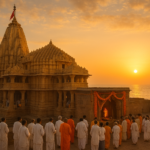
Among India’s countless sacred pilgrimage destinations, Jagannath Dham in Puri, Odisha, holds a truly exceptional place. Revered as one of the Char Dhams established by Adi Shankaracharya, it is not only a major center of devotion but also a living symbol of India’s spiritual heritage, culture, and centuries-old traditions.
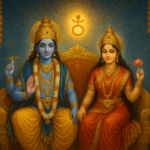
Dedicated to Lord Jagannath, an incarnation of Lord Vishnu and Lord Krishna, the temple welcomes millions of devotees every year. The magnificent Rath Yatra, the sacred Snana Yatra, the unique Mahaprasad, and the rare Nabakalebara ceremony make Jagannath Dham unlike any other temple in the world.
Every ritual performed here carries deep spiritual meaning, reflecting values of equality, devotion, humility, and divine love. Whether you are a pilgrim, a history enthusiast, or someone curious about India’s ancient traditions, Jagannath Dham offers an unforgettable spiritual experience.
So, what exactly makes Jagannath Dham so special? Let’s explore its fascinating history, traditions, and significance.
The History of Jagannath Dham
The present Jagannath Temple was constructed during the 12th century CE by King Anantavarman Chodaganga Deva of the Eastern Ganga dynasty. Later rulers expanded and preserved the temple, making it one of the finest examples of Kalinga architecture.
According to Hindu tradition, King Indradyumna received divine instructions to establish the worship of Lord Jagannath after discovering the sacred form of Neel Madhava. Lord Vishwakarma, the divine architect, is believed to have carved the wooden idols under extraordinary circumstances, giving rise to one of Hinduism’s most unique traditions.
For centuries, Jagannath Dham has remained a spiritual center where millions of devotees gather to seek the blessings of Lord Jagannath.
One of the Sacred Char Dhams
Jagannath Dham is one of the four sacred pilgrimage sites (Char Dham) in Hinduism.
These include:
- Badrinath (North)
- Dwarka (West)
- Rameswaram (South)
- Jagannath Puri (East)
According to Hindu belief, visiting the Char Dhams at least once in a lifetime brings immense spiritual merit and helps devotees progress on the path toward liberation (Moksha).
As the eastern gateway of the Char Dham pilgrimage, Jagannath Dham occupies a special place in the hearts of millions of devotees.
Who is Lord Jagannath?
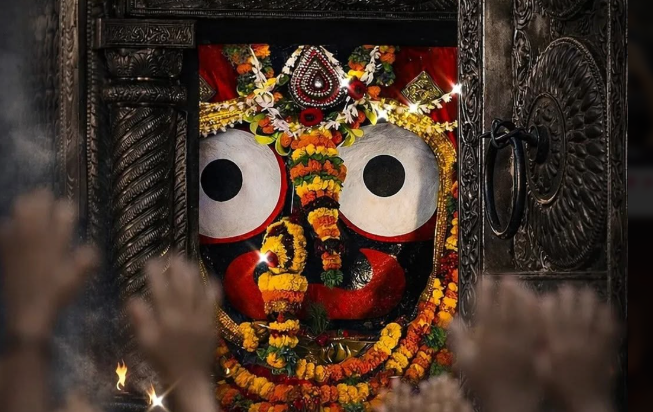
The word Jagannath means “Lord of the Universe.”
The temple houses four principal deities:
- Lord Jagannath
- Lord Balabhadra
- Devi Subhadra
- Sudarshana Chakra
Unlike conventional temple idols, these sacred deities are carved from specially selected sacred neem wood, making them unique among major Hindu temples.
Lord Jagannath is widely worshipped as the universal form of Lord Krishna, embracing all devotees without distinction.
What Makes Jagannath Dham So Special?
1. Wooden Idols Unlike Any Other Temple
One of the most remarkable aspects of Jagannath Dham is that the deities are made of sacred wood instead of stone or metal.
These wooden idols represent the impermanent nature of the physical body while symbolizing the eternal nature of the soul.
2. The Sacred Nabakalebara Ceremony
Every few years, when specific astronomical conditions are met, the wooden idols are ceremonially replaced in a grand ritual known as Nabakalebara.
The old sacred forms are respectfully buried within the temple complex, while newly carved idols become the focus of worship.
This extraordinary tradition symbolizes renewal, continuity, and the eternal cycle of life.
3. The World-Famous Rath Yatra
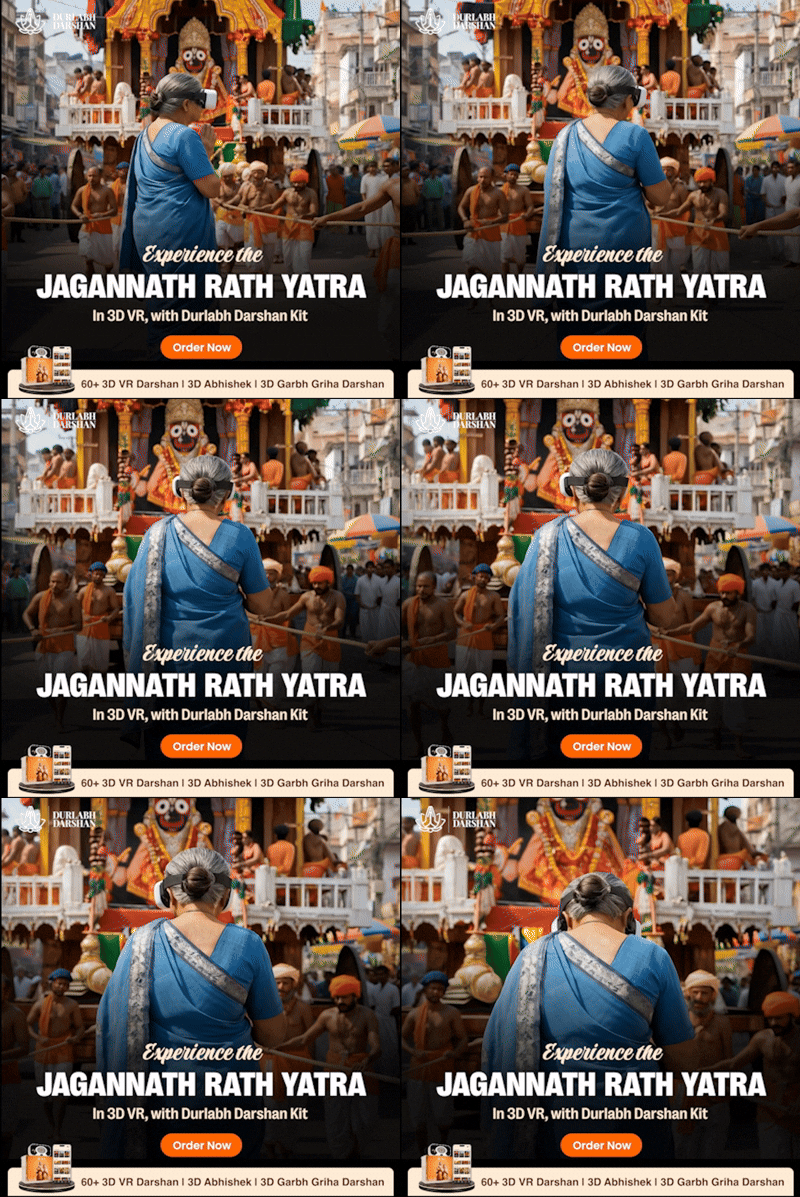
Perhaps the most famous festival associated with Jagannath Dham is the Rath Yatra.
During this magnificent celebration, Lord Jagannath, Lord Balabhadra, and Devi Subhadra leave the temple and travel in beautifully decorated wooden chariots to the Gundicha Temple.
Millions of devotees gather to pull the enormous chariots with ropes, considering it one of the greatest acts of devotion.
The Rath Yatra symbolizes the Lord’s willingness to come out and bless every devotee, regardless of social status or background.
4. Snana Yatra
Before the Rath Yatra begins, the deities are ceremonially bathed with 108 sacred pots of holy water during Snana Yatra.
This annual bathing festival attracts thousands of pilgrims and marks one of the most important rituals in the Jagannath tradition.
5. The Unique Anasara Tradition
Following Snana Yatra, Lord Jagannath is believed to develop a symbolic fever after the ceremonial bath.
As a result, public darshan remains unavailable for approximately 15 days, a period known as Anasara.
During this time, the deities receive traditional Ayurvedic care before reappearing in their youthful form during Nabayouvana Darshan.
This remarkable tradition reflects the deeply personal relationship devotees share with the Lord.

6. Mahaprasad – The Sacred Offering
Jagannath Temple’s Mahaprasad is among the most revered sacred offerings in Hinduism.
Prepared using traditional methods in earthen pots, it is offered to the Lord before being distributed equally among devotees.
One of the most inspiring aspects of Mahaprasad is that everyone sits together and partakes of the food without social distinctions, emphasizing equality and unity.
7. One of the World’s Largest Temple Kitchens
The temple kitchen at Jagannath Dham is regarded as one of the largest functioning temple kitchens in the world.
Hundreds of cooks prepare food daily using age-old techniques passed down through generations.
Thousands of devotees receive Mahaprasad every day, making the kitchen an extraordinary example of organized devotional service.
8. The Sacred Neelachakra
Mounted atop the temple’s main spire is the Neelachakra, an eight-spoked disc made of an alloy of metals.
It represents Lord Vishnu’s Sudarshana Chakra and is considered one of the temple’s holiest symbols.
Devotees offer prayers simply by looking at the Neelachakra from a distance.
9. Daily Flag-Changing Tradition
One of the temple’s most fascinating daily rituals is the replacement of the sacred flag atop the temple.
This centuries-old tradition is performed every day by specially trained temple servitors and remains an important symbol of continuous devotion.
10. A Living Temple Tradition
Unlike many historic monuments, Jagannath Temple is a living center of worship where rituals continue every single day according to traditions that have been preserved for centuries.
From the Lord’s daily meals and attire to festivals and ceremonial processions, every aspect reflects a vibrant spiritual culture that continues to inspire millions.
Religious and Spiritual Significance
Jagannath Dham teaches timeless values that extend beyond rituals.
It emphasizes:
- Equality among all devotees.
- Selfless service as the highest form of worship.
- Devotion over social status.
- Compassion and humility.
- Unity through shared faith.
The temple’s traditions remind devotees that spirituality is not confined to rituals alone but is reflected in kindness, service, and surrender to the Divine.
Experience the Divine Through Durlabh Darshan
For many devotees, undertaking the pilgrimage to Jagannath Dham may not always be possible due to distance, health, age, or personal commitments. Durlabh Darshan offers an additional way to remain spiritually connected through immersive 3D VR temple experiences featuring some of India’s most revered pilgrimage sites. While it does not replace the sanctity of visiting the temple in person, it provides devotees with a meaningful opportunity to experience the temple’s sacred atmosphere, rituals, and devotional environment with remarkable clarity. Whether preparing for a future pilgrimage or simply seeking regular spiritual connection, Durlabh Darshan helps devotees stay connected to India’s rich spiritual heritage from wherever they are.
For More Information Visit :
Jagannath Dham is far more than an ancient temple—it is a living embodiment of India’s spiritual legacy. Its unique wooden deities, sacred traditions, world-famous Rath Yatra, Mahaprasad, Nabakalebara, Snana Yatra, and centuries-old rituals make it one of the most extraordinary pilgrimage destinations in the world.
The temple beautifully demonstrates that true devotion transcends social barriers and that the Divine is accessible to every sincere seeker. Whether one visits Puri in person or learns about its rich traditions from afar, the message of Lord Jagannath remains timeless: compassion, equality, devotion, and universal love.
A journey to Jagannath Dham is not merely a pilgrimage—it is an opportunity to experience one of the oldest living spiritual traditions in the world and to deepen one’s connection with faith, culture, and the eternal presence of the Lord.
Jai Jagannath!
Follow our social media handles for more such content