

Navratri bhajans are the most sacred medium for worshiping Maa Durga, filling devotees’ hearts with devotion throughout this nine-day festival. In 2026 too, these traditional bhajans will bring the blessings of Maa Bhavani into the lives of millions of devotees with their divine grace and devotional essence. This article explores those timeless Navratri bhajans that have been singing the glory of Maa for generations.
The Significance of Bhajan Singing During Navratri
The nine days of Navratri are considered especially sacred for worshiping Devi Maa. During this period, bhajans and kirtans (devotional songs) hold special importance. When devotees sing Navratri bhajans with complete reverence, the atmosphere fills with divinity. These bhajans sung in praise of Maa Durga bring peace to the mind and purify the soul.
Bhajan singing is not merely a religious activity but a deep emotional medium to connect with Maa. When the sound of bhajans echoes in homes or temples, devotees experience that Maa Bhavani herself is present among them.
Traditional Navratri Bhajans Every Devotee Should Sing
Bada Pyara Saja Hai Tera Dwar Bhavani
This Navratri bhajan beautifully describes the glory of Maa’s court. While singing “Bada Pyara Saja Hai Tera Dwar Bhavani,” devotees meditate on the beauty and sanctity of Maa’s temple. This bhajan is the most widely sung in homes and temples during Navratri. Its simple melody and heart-touching words attract devotees of all ages.
Nimiya Ke Dar Maiya
“Nimiya Ke Dar Maiya” is an extremely popular Navratri bhajan, especially prevalent in North India. This bhajan worships Maa Durga seated under the neem tree. Its folk melody and simple sentiment touch the hearts of devotees. This bhajan is especially sung during Navratri jagrans (night vigils).
Ambe Tu Hai Jagdambe Kali
This bhajan to Maa Kali embodies both power and compassion. While singing “Ambe Tu Hai Jagdambe Kali,” devotees worship that form of Maa who destroys evil and protects her devotees. This Navratri bhajan reminds us of Maa’s power.
Maiya Mori Main Nahin Makhan Khayo
Though this bhajan originally relates to Maa Yashoda and Shri Krishna, it is also sung for Maa Durga during Navratri. It contains a wonderful expression of childlike devotion that shows the simple love between Maa and devotee.
The Tradition of Bhajan Singing in Navratri 2026
In Navratri 2026 too, these traditional bhajans will be sung with complete devotion and emotion. The sound of these Navratri bhajans will resonate in temples and homes across the country during jagrans. In today’s times, this tradition of bhajan singing is also spreading through music platforms and social media.
Indian news media also highlight the traditions of devotional music during Navratri. This helps the new generation connect with these sacred bhajans and immerse themselves in the devotion of Maa Durga.
Points to Remember While Singing Navratri Bhajans
When you sing Navratri bhajans, it is important to keep certain things in mind. First of all, bhajans should be sung with complete reverence and devotional feeling. Pronunciation should be clear and pure. While singing bhajans, keep your mind focused and meditate on Maa’s form.
It is also important that bhajans be sung not for display but to connect with Maa. Wear clean clothes and, if possible, sit before Maa’s murti (sacred image) or picture while singing.
How to Sing Navratri Bhajans at Home
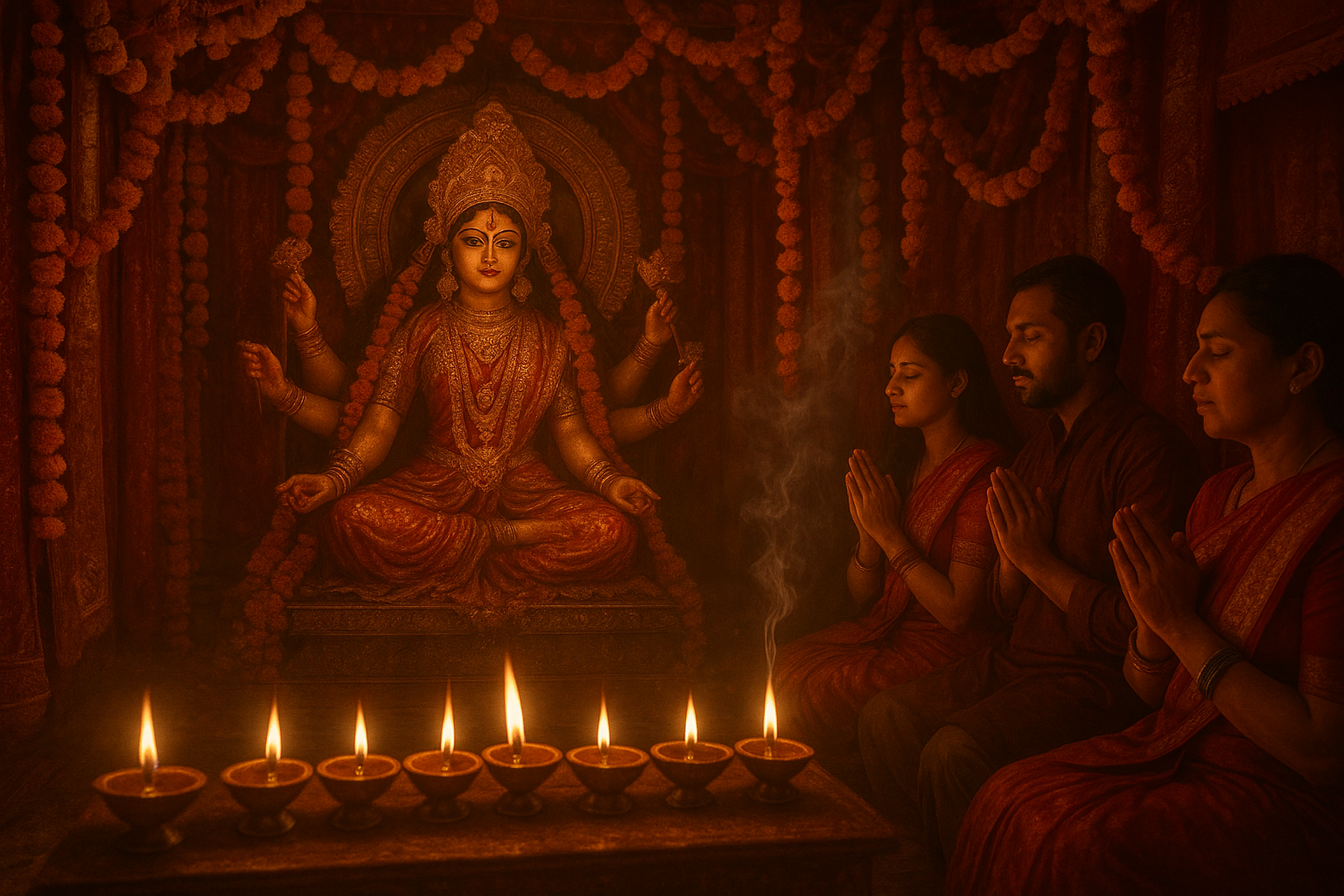
Singing Navratri bhajans at home is considered most auspicious. First, prepare a sacred space in your home where Maa Durga’s murti or picture is installed. Light a diya (lamp) and purify the atmosphere with dhoop-agarbatti (incense).
All family members should sit together and sing Navratri bhajans. Include small children in these bhajans so they too can learn devotional feeling. If you don’t know the bhajans, first listen to them and then gradually learn to sing. With regular practice, you will be able to sing these sacred bhajans well.
Bhajan Singing Across the Nine Days of Navratri
Each day of Navratri is dedicated to different forms of Maa Durga. Similarly, there are special Navratri bhajans for each day. On the first day, sing bhajans in worship of Maa Shailputri; on the second day, bhajans of Maa Brahmacharini; and so on.
Each day, definitely sing bhajans at least once. If possible, sing both morning and evening. On the final days of Navratri, on Navami and Dashami, collective bhajan singing in special jagrans holds particular importance.
Navratri Bhajans in Modern Times
In today’s digital age, Navratri bhajans are reaching the new generation as well. Many versions of these traditional bhajans are available on YouTube and other music platforms. Many devotees listen to and learn these bhajans online.
But remember that listening to bhajans and singing them yourself are two different things. The spiritual experience that comes from singing bhajans yourself does not come from merely listening. Therefore, do make an effort to sing bhajans yourself during Navratri.
FAQ: Questions Related to Navratri Bhajans
Which bhajans should be sung during Navratri?
During Navratri, traditional bhajans of Maa Durga, Maa Kali, and Maa Bhavani should be sung. Popular Navratri bhajans like “Bada Pyara Saja Hai Tera Dwar Bhavani” and “Nimiya Ke Dar Maiya” are especially sung. Besides these, “Ambe Tu Hai Jagdambe Kali” and “Jai Ambe Gauri” are also very auspicious.
At what time should Navratri bhajans be sung?
Navratri bhajans can be sung both morning and evening. Singing bhajans during morning puja (worship) is considered especially auspicious. There is also a tradition of collective bhajan singing during nighttime jagrans. Whenever you sing bhajans, sing with a focused mind and complete reverence.
Should only traditional bhajans be sung during Navratri?
Traditional Navratri bhajans have been sung for centuries and have special power. However, if you also sing a new bhajan with complete reverence, Maa accepts that too. What matters is that the bhajan should have devotional feeling.
What if I don’t know how to sing bhajans?
If you don’t know how to sing Navratri bhajans, first listen to them and gradually try to learn. You can also learn from elders in the family. Simply keeping devotional feeling in your heart and taking Maa’s name is equally sacred. Gradually, you will learn to sing bhajans too.
Is any special preparation needed for singing bhajans in Navratri 2026?
No special preparation is needed for singing bhajans in Navratri 2026. Just keep a pure mind and reverent feeling. If possible, decorate the puja space at home and resolve to sing bhajans regularly throughout the nine days of Navratri. Maa Bhavani will surely accept your devotion.
Experience Divine Darshan with Durlabh Darshan
If you cannot visit Maa’s temples for darshan (sacred viewing) during Navratri, do not worry. Through the Durlabh Darshan app, you can experience divine darshan of Maa Durga’s sacred temples from home. This AR/VR technology gives you the experience of being in the temple. When you view Maa’s darshan on the app while singing Navratri bhajans, the devotional experience becomes even deeper. Download the Durlabh Darshan app and take advantage of Maa Bhavani’s divine darshan. This app is not a replacement for physical pilgrimage but a supportive tool that strengthens your devotion.
For More Information Visit :
Follow our social media handles for more such content