

Shri Shani
Lord Shani Dev is worshipped as the divine force of justice, discipline, karma, truth, and consequences. In Hindu tradition, Shani Dev is not merely feared; he is deeply respected as the one who gives every person the results of their actions. He is believed to test human character, remove arrogance, expose falsehood, and guide people toward humility, patience, responsibility, and spiritual maturity. The Shri Shani Chalisa is a devotional hymn that praises Shani Dev’s power, his role in karmic justice, his divine appearance, and his impact on kings, warriors, and ordinary devotees alike.
Devotees recite the Shri Shani Chalisa to seek protection from suffering, relief from difficult astrological periods, inner strength, discipline, and the grace of Shani Dev. This Chalisa reminds us that Shani is not only the giver of hardship, but also the one who transforms hardship into wisdom and justice.
Below is the full Shri Shani Chalisa, followed by its importance and simple meaning.
Shri Shani Chalisa
Doha
Jai Ganesh Girija Suvan, Mangal Karan Kripal |
Deenan Ke Dukh Door Kari, Keejai Nath Nihal ||
Chaupai
Jai Jai Shri Shanidev Prabhu, Sunahu Vinay Maharaj |
Karahu Kripa He Ravi Tanay, Rakhahu Jan Ki Laaj ||
Jayati Jayati Shanidev Dayala |
Karat Sada Bhakt Pratipaala ||
Chari Bhuja, Tanu Shyam Virajai |
Mathe Ratan Mukut Chhavi Chhajai ||
Param Vishal Manohar Bhala |
Tedhi Drishti Bhrikuti Vikrala ||
Kundal Shravan Chamacham Chamke |
Hiya Maal Muktan Mani Damke || 1 ||
Kar Mein Gada Trishool Kuthara |
Pal Bich Karain Arihin Sanhara ||
Pingal, Krishno, Chhaya Nandan |
Yam, Konasth, Raudra, Dukhbhanjan ||
Sauri, Mand, Shani, Dash Nama |
Bhanu Putra Poojahin Sab Kama ||
Ja Par Prabhu Prasann Hvahin Jahin |
Rankahun Raav Karain Kshan Maahin || 2 ||
Parvathoo Trin Hoi Niharat |
Trinhoo Ko Parvat Kari Darat ||
Raaj Milat Ban Ramahin Deenhayo |
Kaikeihun Ki Mati Hari Leenhayo ||
Banhoon Mein Mrig Kapat Dikhai |
Maatu Janki Gai Churai ||
Lakhanahin Shakti Vikal Karidara |
Machiga Dal Mein Haahakaara || 3 ||
Ravan Ki Gatimati Baurai |
Ramchandra Son Bair Badhai ||
Diyo Keet Kari Kanchan Lanka |
Baji Bajrang Beer Ki Danka ||
Nrip Vikram Par Tuhi Pagu Dhara |
Chitra Mayoor Nigali Gai Haara ||
Haar Naulakha Lagyo Chori |
Haath Pair Darvay Tori || 4 ||
Bhaari Dasha Nikrisht Dikhayo |
Telihin Ghar Kolhoo Chalvayo ||
Vinay Raag Deepak Mahan Keenhyon |
Tab Prasann Prabhu Hvai Sukh Deenhyon ||
Harishchandra Nrip Naari Bikani |
Aap-hun Bhare Dom Ghar Paani ||
Taise Nal Par Dasha Sirani |
Bhoonjimeen Kood Gai Paani || 5 ||
Shri Shankarahin Gahyo Jab Jai |
Parvati Ko Sati Karai ||
Tanik Vilokat Hi Kari Reesa |
Nabh Udi Gayo Gaurisut Seesa ||
Paandav Par Bhai Dasha Tumhari |
Bachi Draupadi Hoti Ughari ||
Kaurav Ke Bhi Gati Mati Maryo |
Yuddh Mahabharat Kari Darayo || 6 ||
Ravi Kahan Mukh Mahan Dhari Tatkala |
Lekar Koodi Parayo Patala ||
Shesh Devalakhi Vinati Lai |
Ravi Ko Mukh Te Diyo Chhudai ||
Vahan Prabhu Ke Saat Sajana |
Jag Diggaj Gardabh Mrig Swana ||
Jambuk Singh Aadi Nakh Dhaari |
So Phal Jyotish Kahat Pukari || 7 ||
Gaj Vahan Lakshmi Grih Aavain |
Hay Te Sukh Sampati Upjavain ||
Gardabh Haani Karai Bahu Kaaja |
Singh Siddhkur Raaj Samaja ||
Jambuk Buddhi Nasht Kar Darai |
Mrig De Kasht Pran Sanharai ||
Jab Aavahin Prabhu Swan Sawari |
Chori Aadi Hoy Dar Bhaari || 8 ||
Taisahi Chari Charan Yeh Nama |
Swarn Lauh Chaandi Aru Tama ||
Lauh Charan Par Jab Prabhu Aavain |
Dhan Jan Sampatti Nasht Karavain ||
Samta Tamra Rajat Shubhkari |
Swarn Sarv Sarv Sukh Mangal Bhaari ||
Jo Yeh Shani Charitra Nit Gavai |
Kabahun Na Dasha Nikrisht Satavai || 9 ||
Adbhut Nath Dikhavain Leela |
Karain Shatru Ke Nashi Bali Dheela ||
Jo Pandit Suyogya Bulvai |
Vidhivat Shani Grah Shanti Karai ||
Peepal Jal Shani Divas Chadhavat |
Deep Daan Dai Bahu Sukh Pavat ||
Kahat Ram Sundar Prabhu Dasa |
Shani Sumirat Sukh Hot Prakasha || 10 ||
Doha
Path Shanishchar Dev Ko, Kee Hon Bhakt Taiyar |
Karat Path Chalis Din, Ho Bhavsagar Paar ||

Importance of Shri Shani Chalisa
The Shri Shani Chalisa is a hymn of respect, surrender, and understanding of karmic truth. Shani Dev is often associated with hardship, but this Chalisa reveals a much deeper spiritual meaning. Shani Dev does not punish without reason. He reflects the results of one’s actions and helps remove ego, false pride, carelessness, and unrighteousness. His influence is meant to awaken discipline, honesty, and self-awareness.
This is why the Chalisa is important for devotees facing difficulty, delays, fear, instability, or intense phases of life. It reminds them that even suffering can become a path of correction and spiritual growth. When approached with humility, Shani Dev is seen not only as a strict judge, but also as a compassionate guide.
Simple Meaning of the Chalisa
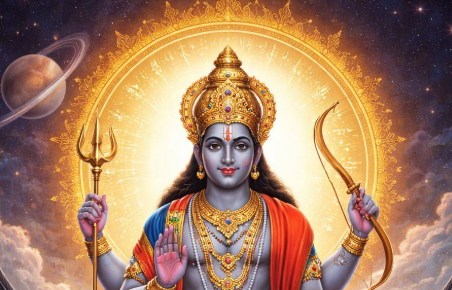
The Chalisa begins with a prayer to Shani Dev, asking him to hear the devotee’s humble plea and protect his honor. Shani Dev is described as dark in complexion, powerful in form, crowned with divine brilliance, and carrying weapons such as the mace, trident, and axe. His fierce appearance symbolizes the seriousness of karmic law and the unavoidable nature of truth.
The hymn then describes his many names, such as Pingal, Chhaya Nandan, Konasth, Raudra, and Dukhbhanjan. These names reveal different aspects of his power and divine identity. He is the son of Surya, deeply influential, and capable of transforming even a beggar into a king or a king into a beggar. This does not mean random favor or suffering. It means that worldly position is temporary, and Shani Dev can reverse human pride and illusion in an instant.
Several verses refer to episodes from sacred history. The Chalisa suggests that under Shani’s influence, great events unfolded even in the Ramayana and Mahabharata. It recalls how the mind of Kaikeyi changed, how Sita was separated, how Lakshman was struck, how Ravana’s thinking became corrupted, and how great kings like Vikramaditya, Harishchandra, and Nala faced severe trials. The message is clear: no one is beyond testing. Power, beauty, wealth, and fame do not protect a person from karma.
These references are not meant only to inspire fear. They show that difficult periods are universal, and even the greatest figures pass through them. Shani Dev’s influence is shown as something that breaks illusion, humbles the proud, and teaches patience.
The Chalisa also refers to difficult stories of loss, humiliation, and struggle. But many of these stories turn toward redemption. After suffering comes wisdom. After humility comes grace. This reflects the deeper spiritual role of Shani Dev: he disciplines the soul so that truth may emerge.
Later verses describe his vehicles and their symbolic results according to traditional astrology. These references come from Jyotish traditions and suggest that the effects of Shani can vary depending on circumstances. But the spiritual point remains the same: the movements of Shani call human beings toward alertness, restraint, responsibility, and prayer.
One especially important verse says that whoever regularly sings the story of Shani will not be deeply afflicted by harsh phases. Another mentions worship on Saturday, offering water to the peepal tree, giving oil lamps, and performing Shani graha shanti. These devotional acts are understood as ways of cultivating humility, patience, and reverence while seeking relief through sincere prayer.
The Chalisa ends by saying that one who recites it for forty days with preparation and devotion can cross the ocean of worldly suffering. This reflects the devotional belief that remembrance of Shani Dev with faith can transform even difficult karmic experiences into blessings of endurance, learning, and release.
Spiritual Message of Shri Shani Chalisa
The Shri Shani Chalisa teaches that divine justice is real and unavoidable. Shani Dev represents the part of life that forces human beings to slow down, reflect, and face truth. He exposes pride, falsehood, carelessness, injustice, and attachment. But he does this not to destroy the soul, but to refine it.
A major message of this Chalisa is that suffering is not always meaningless. Under divine guidance, it can become a path of purification. Shani Dev teaches patience when life becomes delayed, humility when status is lost, endurance when pain comes, and honesty when illusions fall away. In this way, Shani is both feared and revered.
Another important message is surrender. The devotee in this Chalisa does not argue with destiny; he prays for grace, protection, and relief. This teaches that while karma must be faced, divine compassion can still soften its impact and guide the soul safely through it.
Benefits of Reciting Shri Shani Chalisa
Devotees recite the Shri Shani Chalisa for relief from difficult periods, especially those associated with fear, obstacles, delay, financial trouble, emotional heaviness, or astrological stress. It is believed to help bring patience, calmness, protection, and the grace of Shani Dev.
Many recite it to reduce the intensity of suffering, to pray for stability, to cultivate discipline, and to seek forgiveness for past actions. The Chalisa is also valued because it encourages humility and devotion rather than panic. It reminds the devotee that no phase of life is beyond divine guidance.
When to Recite It
The Shri Shani Chalisa can be recited on any day, but it is especially considered auspicious on Saturday, during Shani-related observances, or during difficult astrological periods such as Sade Sati or Dhaiya, according to traditional belief. Many devotees recite it in the morning or evening, offer mustard oil lamps, water to the peepal tree, black sesame, or simple prayers with sincerity.
Reciting it with discipline and a calm mind is considered especially helpful.
Conclusion
The Shri Shani Chalisa is a powerful hymn that praises Shani Dev as the divine lord of justice, karma, discipline, and transformation. It presents him not merely as a bringer of hardship, but as a force that removes pride, reveals truth, and ultimately guides the soul toward maturity and humility.
Whoever recites the Shri Shani Chalisa with faith and devotion is believed to receive inner strength, patience, relief from suffering, and the grace of Shani Dev. More than a prayer for escape, this Chalisa is a reminder that even the hardest phases of life can become sacred when faced with humility, prayer, and trust in divine justice.
Jai Shri Shani Dev.
Jai Ravi Putra.
Jai Shanidev Maharaj.
Experience Divine Darshan from Home
Experience divine darshan from home with Durlabh Darshan VR.
Make your devotion even more special with Durlabh Darshan VR. Experience temples, aartis, and sacred places from home through a deep and lifelike spiritual experience, and feel devotion in a new and wonderful way.
For More Information Visit :
Follow our social media handles for more such content